Showing posts with label Evergreen. Show all posts

The Black Ebony Tree

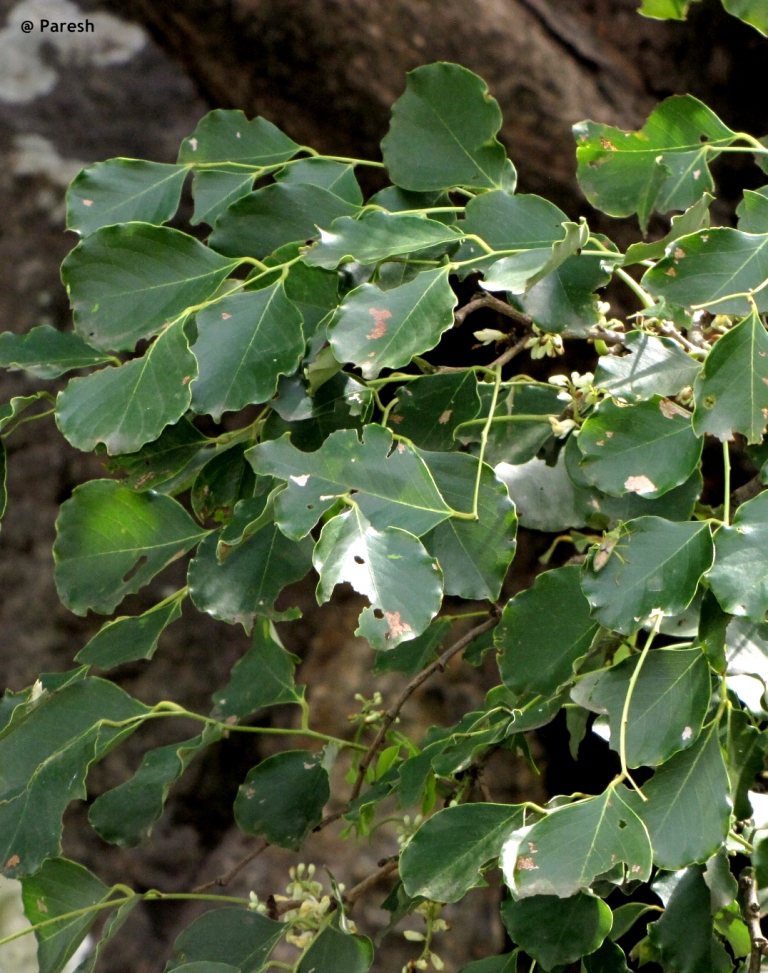
Here is the tree which is described in a perfect manner by its name. The generic name is derived from greek word dios which means ‘divine’, and pyros meaning ‘fruit’, referring to the excellent fruit of the genus. The specific name melanoxylon means ‘dark wood’. The Tendu (Diospyros Melanoxylon/टेंभूर्णी, टेमरू, तेंदू) is medium-sized handsome tree, which is also known as Black Ebony. Its small flowers appear from April to June on new shoots.

Tendu, though a minor forest produce (MFP) in Central India, is very underutilized tree. The most economically significant use of this species is that its leaves are used to roll bidis (an indigenous traditional cigarette, which uses the kendu leaf for rolling instead of paper). The leaves possess unrivalled qualities of flavour, colour, flexible and leathery texture, decay resistance and easy workability, which make them admirably suitable for wrapping bidis.

However, most of the harvest goes waste as the fruit has never been explored for its nutritional aspects. This lesser known fruit is edible & is delicious too! Once fully ripen, the yellow pulp is soft & has a pleasant and sweet taste.

Tendu is a seasonal fruit available mainly in summer. The fruit ripening takes almost a year. These edible fruits are largely eaten & disseminated by birds, notably hornbills. The tree produces good seed in alternate years. The fruits and powdered seeds are sold in local markets and eaten. 

The tree is deciduous or evergreen depending on its habitat. In a dry locality, it is leafless for a short time in the hot weather, regaining its leaves in May-June. In a moist locality, it is evergreen. Though the tree has small flowers, the tree is regularly visited by insects and butterflies. It is the larval host plant for the Symphaedra nais & Spindasis vulcanus butterflies.

The tree has been revered in Ayurvedic medicine. The seeds have been prescribed as a cure for mental disorders, nervous breakdowns and palpitations of the heart. The fruits have a cooling and an astringent effect. Dried flowers are reportedly useful in urinary, skin and blood diseases. The bark is astringent; its decoction is used in diarrhoea. Its regeneration is through seeds, cuttings and root suckers. Soaking seeds for about 12 hours in cold water improves germination. Stump planting has been found to be as good as direct seeding. 

Tendu is the most widely distributed and tolerant species when considered to soil requirements. It grows on poor denuded soils, hot and dry hill slopes, stony soils and also heavy clays. It demands light; it is drought and frost hardy but sensitive to water-logging. It is coppiceable & tolerance to pruning makes it a good fodder tree. The tree also pollards well, although the growth of the pollard shoots is slow. Its cultivation on field boundaries or distributed in field crops, such as oilseed and cereal crops, appears to be a feasible and attractive proposition. Its deep tap-rooting habit would minimize competition with annual crops. It gives good quality charcoal. 

The fruit tree being rich in nutritional, medicinal and processing qualities can play a very significant & vital role in the livelihood security of the rural communities through enhanced household income, employment generation and environmental protection. Tendu fruits have a great potential for commercial cultivation. In fact, plantation of Tendu tree along with other local fruits of our region like Ber, should be done in city gardens and residential areas.

The Rosewoods

There is a tree which is often mistaken for Indian Rosewood due to striking similarity in their leaves and flowers. But can be distinguished by somewhat darker bark.

Black Rosewood (Dalbergia Latifolia/काळा शिसम, काळारुख) is moderate-to-large sized tree with a dome shaped crown of lush green foliage. The leaves of Shisham have pointing tip whereas the leaves of this species are blunt and broadly rounded with wavy margins. The broad leaves explains the species name latifolia.

Furthermore, though it sheds its leaves, it can hardly be found leafless. It flowers abundantly in aromatic clusters of white colour creating an eye-soothing view. Due to these reasons, it is noted to attract number of birds, butterflies, insects and wildlife. Hence the tree needs to be introduced in home gardens in urban societies. 

Practically, Black Rosewood is quite similar to Shisham, including their use in agroforestry, apiculture, medicines, ornamental or soil improvement. It is also a Nitrogen-fixing tree and gives the nitrogen-rich foliage which is widely used as a green manure and fodder. Like other member of the genus Dalbergia, its honey is dark amber and strong flavoured.

In a drier habitat, the hardy tree is leafless for couple of months, regaining its leaves in April-May. In a moist locality, it is evergreen throughout the year. The species grows on a variety of soils. It grows best on well-drained, deep, moist soils & black cotton soils. The root system of the tree is well developed with deep tap roots and long lateral roots. It reproduces by seed, root sucker or cuttings. Although no treatment is necessary, soaking seed in cool water for 12-24 hours will hasten germination of seeds. 

Black Rosewood is widely used for reforestation of eroded soils. It is also planted as a roadside tree and shade tree. It acts as a soil improver. The leaf litter decomposes slowly releasing nutrients gradually and it is used as mulch. Medicines are made from the tannins in the bark, for diarrhoea, worms, indigestion, and leprosy. These tannins also produce an appetizer.

There is another species from the same genus, Dhobin or Phansi (Dalbergia Lanceolaria subsp. Paniculata/धोबीन, फणशी, दोंडूस) is a very conspicuous and handsome, deciduous tree. It is eye as well as ear catching tree when profusely covered with flowers and young leaves. The tree is actually loud with the buzzing of thousands of bees. Its flowers are white & fragrant.

This species is a moderately fast growing tree. It is recommended for reforestation projects on degraded land where seeds are unlikely to grow successfully. It is propagated by seeds. Young seedlings grow well in the dappled shade of the forest, but they become more light-demanding as they grow older. 

Different parts of trees particularly seed and bark are used in the Ayurveda; mainly to treat arthritic infections and inflammations.

The lesser known tree species has a great potential in Agroforestry. Dhobin has a symbiotic relationship with certain soil bacteria, these bacteria form nodules on the roots and fix atmospheric nitrogen. Some of this nitrogen is utilized by the growing plant but some can also be used by other plants growing nearby. In  other uses, it is used as wind  break for micro-climate enhancement, nectar source for honeybees, and in addition to these leaves are used as a fodder for livestock animals. 

Both these Rosewoods are excellent choice for farmers as well as city dwellers!

The Scholar Tree

A medium-to-large evergreen tree with a dense crown and a straight cylindrical bole... One may not recognise the tree, but he/she will not fail to notice the strong fragrance of the flowers, which bloom October onward. The Scholar tree (Alstonia Scholaris/सातवीण, सप्तपर्णी) is an elegant evergreen species. 

Saptaparni in Sanskrit means ‘seven leaves’, and is based on the fact that 4 to 8 simple leaves - more often seven - occur in a circle at each node around the stem. The tree has traditionally been used to make wooden slates & black boards for school children. Hence the tree is also known as Black board tree. Since ancient times, the Scholar tree has been used to make paper in India. The tree has been also recommended for the manufacture of pencils. These things help to explain the name of the species, scholaris.

The tree is really elegant whether it is flowering or not. In October small, cream or greenish white colored fragrant flowers appear. Inflorescence mostly formed of dense bunches of flowers, filling the air at dusk with a distinct and unmistakable fragrance. The pungent fragrance is described variously as ‘strong’, ‘heady’, ‘intoxicating’, ‘solidifying the air’, ‘fragrance of peace & contentment’ and so on... Those who like it can’t seem to have enough of it; there are others who complain of headaches and breathing troubles too. It is a tall, fast-growing tree with greyish rough bark and milky sap. The leaves are whorled, that is, several of them coming out of the same point. Leaves are slightly rounded, leathery, dark green in color. This gives the tree a beautiful shape.

In India, many tribal peoples believe that the tree is evil and avoid it completely. They say that the tree is inhabited by an evil spirit who will possess any individual who dares walk or sleep beneath it. This spirit is also said to kill any individual who chooses to sleep beneath its branches. Local superstition about the tree mainly stems from the fact that its milky sap is rich in poisonous alkaloid, and thus the tree is shunned by cattle. Thanks to this belief, Devil’s tree has been spared much of the destruction that has faced other species of tree in India. 

The hardy species can be grown in a variety of climatic conditions in India. However, it prefers a fairly moist habitat. It is also the State Tree of West Bengal.

Scholar tree has many medicinal properties like anti-microbial, anti-amoebic, anti-diarrheal, anti-hypertensive, anti-malarial, febrifuge, stimulant, hepato-protective, immuno-modulatory, anti-cancer, anti-asthmatic, antioxidant, analgesic, anti-inflammatory, anti-fertility, anti-diabetic etc. In Ayurveda it is used for treating skin disorders and for upper purification process of Panchkarma. It is also useful to purify blood & relieve respiratory disorders and known to rejuvenate the digestive system.

The tree is moderately fast growing & coppice freely. When in flower, they are often surrounded by pollinating bees and butterflies. The fruits open on the tree and the seeds, which have a tuft of silky hairs at each end, are dispersed by wind. It can be easily propagated by seeds and also by cuttings. It is often planted as an avenue tree and as ornamental in gardens.

The Beauty Leaf

As the name suggests, Indian Laurel (Calophyllum Inophyllum/उंडी, नागचाफा) has attractive and beautiful foliage. Because of its decorative leaves, fragrant flowers and spreading crown, it is best known as an ornamental plant. But this plant has more to its credit.

Also known as Sultan Champa, it is a large evergreen tree native to southern coastal India. It is a low-branching and slow-growing tree with a broad and spreading crown. Due to its slow growth & ornamental appearance, the tree is often planted in urban areas for beautification. It is valued for its deliciously scented snow-white flowers that are reminiscent of orange blossom. The fragrant flowers have been prized as an adornment and as a perfume. But the cherry on cake is its flowering can occur year-round. If not year-round, usually two distinct flowering periods are observed, in late spring and in late autumn. 

Besides being a popular ornamental  tree, its wood is hard & strong and has been used in construction or boat-building. It grows best in sandy well drained soils in coastal areas but will tolerate clays, calcareous soils and rocky soils. It is also found higher up the rivers along river margins. The tree demands light and prefers full sun. It is sensitive to frost and fire. It tolerates occasional water-logging in coastal areas.

Indian Laurel is a multipurpose plant, and is harvested from the wild for local use as a medicine and source of materials. The tree is planted for shade and for reforestation & afforestation. Also used to provide shelter from the wind and as an efficient shore protector in most places. The mature fruit is burned as a mosquito repellent. The fruit is a source for bio-diesel is used in treating skin disorders, diarrhea, osteo-arthritis, rheumatoid arthritis, Kapha and Pitta imbalance disorders and more.

The seeds yield viscous oil, known as Domba oil, which is of excellent quality for soap manufacture; it is also used as an illuminant and in local medicine. It may be employed as a remedy for rheumatism, ulcers and skin diseases. Bark is said to be an astringent. A decoction of the bark and latex is used medicinally, internally against diarrhoea and after childbirth, externally against skin and eye diseases and rheumatism. Leaves, flowers and seeds are sometimes also used in local medicine. 

Beauty leaf usually propagated by seeds or cuttings. It makes a good specimen for street, parking lot as a shade tree and is both wind and salt tolerant, making it especially useful for coastal locations. It becomes twisted and contorted when exposed to constant wind, creating an interesting specimen. Beauty leaf is sometimes used as a tall hedge or windbreak around tennis courts and similar places. It could be used more often as an urban street and garden tree.

The Blue Mist Tree

Ironwood tree or Anjani (Memecylon Umbellatum/अंजनी) is a small, evergreen tree with amazing bright blue flowers and with dense, dark green foliage. The tree is a predominant arboreal species in the dry evergreen and semi-deciduous tropical forests along the western and eastern coasts. It is also known as ‘Pride of Matheran’ as it is found in abundance at the famous hill station Matheran, in Maharashtra.

The flowers are mildly scented and are so beautiful that they look almost unreal. The tree produces showy clusters of tiny purple flowers, which are grouped in great quantity in axillary umbrellas, close together and compact, appear in the lower part of the branches having no leaves. The trees bloom once or twice a year and are then indeed a beautiful sight. As the flower petals are shed, the soil below appears purple in colour. May be that’s why the tree is also called Blue Mist tree. 

The fruits of Ironwood tree are small, about 1cm and are green, turning red then black as they ripen. The fruits are pulpy, astringent & edible and were consumed in the past during famine periods. The leaf edges look golden if held against light. All together flowers, fruits and leaves make it a wonderful play of colours. 

This tree is not only beautiful, but also useful. It provides hard timber used for making boats. Dyes employed in the textile factories are extracted from its leaves and flowers. Although the species is widespread in nature and is much appreciated by the local populations, it is relatively little known in urban localities. It is a tough species having a long tap-root system. It usually & easily reproduces by seeds and the growth is moderately fast. 

The tree had a long history of traditional uses for wide range of diseases. It has been proved that various parts of the plant were used in traditional systems of Ayurveda to treat various ailments. In recent years it has been experimentally proved that the plant possess analgesic, anti-inflammatory, wound healing, hypoglycemic, antimicrobial, anti-spasmodic, nephro-protective and hepato-protective activity. In Ayurveda, the leaves are used as a cooling astringent and are given in leucorrhoea & gonorrhea. The leaves are reported to possess antiviral activity and also used in snakebite. The seeds are used to cure cough and sedative. Anjani is one of the important medicinal plants used by Paliyan tribes in Sirumalai hills of Eastern Ghats of India, especially for skin diseases.

We should not underestimate its potentiality as Agroforestry species. The tree can be used as windbreaks at farms. Also it does not compete with adjacent plants for water due to the long tap-root. Without doubt, it is an ornamental plant having showy blooming which, almost entirely, covers the branches in the part bearing no leaves. The flowers and fruits are visited by bees, butterflies and birds; increasing its natural beauty beyond limits! 

Madhugandha..Sweet Odoured Tree

With its small shiny, thick, narrow, pointed leaves, straight trunk and spreading branches, it is a prized ornamental specimen. Indian Medlar or simply, Bakul (Mimusops Elengi/बकुळ, सुरभी) is a medium-sized evergreen tree having a well shaped dense, rounded canopy with rough dark grey bark.

Bakul is a very beautiful tree. The tree bears creamy white fragrant flowers and ovoid berries. The flowers have such a great fragrance that it fills the night air with the delicious heady aroma. Flowers are small, star-shaped with a crown rising from the center. In the morning the fragrant flowers which so graciously scented their surroundings with their deep, rich fragrance during the evening hours, fall to the ground. People love to collect them as they retain their odor for many days after they fall. They are offered in temples and shrines throughout the country.

The tree provides a dense shade. Also it gives useful green manure. Besides, due to its moderate size, it is a perfect candidate for urban plantations and home gardens. It is preferred along roads. The tree is said be useful in Apiaries and as a windbreak. Bakul has innumerable synonyms portraying its peculiarities like Surabhi meaning 'fragrant', Madhu gandha meaning 'sweet odoured' etc.

Bakul tree is one of the herbs mentioned in all ancient scriptures of Ayurveda and has been used for medicinal purpose since centuries. In Meghaduta, one of the highly esteemed ancient poetry of the great poet Kalidasa, there is a mention of Bakula tree. Sushruta has cited it to have astringent property and beneficial to alleviate kapha and pitta doshas in Sushruta Samhita. Chakradatta has also mentioned about its usefulness in dental diseases. The bark, flowers, fruits and seeds are cooling, anthelmintic, tonic and febrifuge. 

In Indian mythology, it is said to put forth blossoms when sprinkled with nectar from the mouth of lovely women. The Bakul tree is associated with Lord Trimurti and Bakula is one of His several names. The flower is offered to Gods and Goddesses throughout India. The tree is also sacred to the Buddhists and the Jain. Because of the flowers' ability to hold on to their fragrance for many days after they fall from the tree, the offering of the flower has a symbolic meaning - the flower signifies unwavering devotion. :-)

The Hard among Trees

Famed for its immense medicinal value, Indian Rose Chestnut, Cobra Saffron or Nagkesar (Mesua Ferrea/नागकेसर) is a handsome, medium-sized evergreen tree. Its botanical name Ferrea means 'belonging to iron' referring to its very hard & durable timber. It is often planted as an ornamental for its fragrant white flowers that yield a perfume.

The tree flowers during the dry season and flowers are bisexual. They has nice fragrance. The flushes of new leaves are produced just after flowering at the start of the rainy season. The new foliage can be strikingly attractive as it's red in colour which turns creamy yellow afterwards, giving the tree a wonderful appearance. The flower is the state flower of Tripura and the tree itself is the state tree of Mizoram.

The Nagkesar tree is very beautiful and known for its ornamental value. It is an attractive lawn tree with a regular, conical, bushy crown, vivid green leaves and showy, fragrant flowers. It is commonly grown along roadsides and in parks, a perfect species for urban plantation. Though it is equally useful, it is hardly considered as!

Environmentally, the tree very good! Its dense canopy provide shelter to many birds as well as shade. It provide abundant green manure for agriculture or garden. It also helps in Nitrogen fixing due to Endo-mycorrhizal associations. The seed meal of Nagkesar is a good source of protein & energy and its use as a feed ingredient for cattle is proposed.

Other uses include as a provider of good quality coal, tannin, dyes etc. The fragrant flowers are also used to stuff pillows, cushions and in cosmetic products & perfumes.

Medicinally, it is well known species in traditional medicine of Ayurveda and admired all over India as well as overseas. Many parts of the tree has digestant, antimicrobial, antibacterial, anti-inflammatory, antipyretic, anthelmintic and haemostatic activity. It can be used in the treatment of numerous ailments like fever, itching, nausea, leprosy, skin disorders, erysipelas, bleeding piles, metrorrhagia, menorrhagia, excessive thirst and sweating. It also known to enhance the complexion. It leads to fragility transparency to the skin. Oil from the seeds is used for sores, scabies, wounds and rheumatism.

Probably that's the reason, Nagkesar tree is considered sacred in India!

Neem and Neem!

We all are aware of importance of the Noble tree Neem. Today we will get acquainted to two tree species which, though closely resembles Neem, are in no way related to it.

The Curry Leaf (Bergera Koenigii/कढीनिंब, कढीपत्ता) is a small evergreen tree which is a fast grower. It is known so because it has the 'leaf that is used to make curry' and it is present in almost all the dishes of Tamil Nadu state. In other states of India also, the leaves are a must and are absolutely necessary for the authentic flavour!

It is also known as Sweet Neem since the appearance of the leaves is similar to the unrelated medicinal Neem tree. Similarly in Gujarati, it is known as Meetho Leemdo (means Sweet neem). The leaves are highly aromatic. It is a good source of vitamin A, Calcium & Iron. The leaves primarily used in providing a flavour in Indian food. The flowers are small, white & fragrant. The small black shiny berries are edible and are very nutritious.

The Curry leaves are highly valued as seasoning or a natural flavouring agent in southern and west-coast Indian cooking, and especially in curries, though can be used in many other dishes to add spice like chutneys, soups, pickles, vegetables, buttermilk preparations etc.

The leaves and fruits are also used as a herb in Ayurvedic medicine. Their properties include much value as an anti-diabetic, antioxidant, antimicrobial, anti-inflammatory, hepato-protective, anti-hyper-cholesterolemic and many more. It can help in reducing blood sugar level. Curry leaves are cool, stimulant and also known to be good for hair, for keeping it healthy and long. It also helps prevent premature hair greying. A volatile oil extracted from leaves is used as a fixative for soap perfume. This plant is quite ornamental due to its compound leaves. It can, therefore, be used as a hedge and as an ornamental species. It is also known for its soil-binding ability, hence prevents soil-erosion.

Curry Leaf tree does not require much maintenance or care. The tree is easily propagated from its numerous root-suckers or seeds.

The other species which is frequently confused with Neem tree is Bead tree or Persian Lilac (Melia Azedarach/बकाणनिंब). It is a moderately-sized, fast-growing tree. Locally, it is also known as Bakain.

The tree appears very beautiful due its bright green foliage. It produces dense, shady and well rounded canopy. In landscapes, it is usually pruned to form an umbrella shape.
Bead tree is a tough survivor and is usually grown in gardens or as a street tree where it provides cool shade on hot summer days. The tree produces bright and lush green foliage in spring followed by beautiful clusters of tiny, pale-purple or lilac blooms that draw attention to their presence by their delightful fragrance. The cherry-like green fruits grown abundantly.

Like Neem, it is naturally resistant to pests, termites and fungal infection. Extract from the bark and fruit has pharmacological properties and is used to kill parasitic roundworms. It is well known for its medicinal uses. Its various parts have antihelmintic, antimalarial, cathartic, emetic properties and are also used to treat skin diseases. Seed-oil is used in rheumatism. Leaves and fruits are insect repellent. Dried ripe fruit is used as an external parasiticide.

The hardy tree is drought-tolerant and is easily propagated by seeds. It also withstand coppicing and lopping as for fodder and leaves are highly nutritious. It also gives good quality charcoal. Fruit stones make ideal beads and are used in making necklaces & rosaries.

Bead tree is a well-known ornamental avenue tree, for its scented flowers and shady, spreading crown. But it is also widely used as a shade tree in coffee plantations or as windbreak. It also provide abundant green manure.

It seems, its best to have these Neems! :-)

The Indian Bread-fruit

A unique fruit tree..Jackfruit (Artocarpus Heterophyllus/फणस) is a handsome & stately tree, 30-70 ft tall, with evergreen, alternate, glossy, somewhat leathery leaves. Jackfruit tree is unique in the fact that it produced huge fruits directly from its stem.

It is a beautiful tree which has played a significant role in Indian agriculture. Archaeological records revealed that the tree was cultivated in India 3000 to 6000 years ago. It has  individual flowers borne on an elongated axis and forming a racemoid inflorescence. Male spikes produced singly, elongated, whitish-green or dark green with smooth skin, becoming yellowish & rough when mature. Female spikes either solitary or paired, oblong or cylindrical with rough, light to dark green skin and green annulus. Flowers are pleasantly aromatic but the fruits are more interesting! Its not a fruit, but a collection of fruits.

A multiple fruit can be seen consisting of several achenes (syncarp), each of which is indehiscent and one-seeded. Inside are the fruit-lets, which are the true fruits! It is composed of fleshy aril and the seed. The aril is golden yellow to yellow-orange in colour and is sweet & aromatic. It is a good source of dietary fibre and contain various nutrients like vitamins & carotenes. May be due to this nutritious fruit, Jackfruit is one of the three auspicious fruits of Tamil Nadu state, along with Mango and Banana.

Jackfruit is a relatively hardy tree with a long taproot. It grows well in a warm, humid climate. It tolerates a wide range of soils including shallow limestone & rocky substrates. It can also withstand lower temperatures and frost. The tree can be grown from seeds & cuttings.

Jackfruit tree plays important role in erosion control. It can be planted to control floods and soil erosion in farms. It also provide delicious fruit which when young is cooked as a vegetable, pickled or canned in brine or curry. Pulp of ripe fruit is eaten fresh or made into various local delicacies, chutney, jam, jelly & paste; or preserved as candy. The pulp is also used to flavour ice-cream & beverages and reduced to a concentrate or powder to be used for preparing drinks. Even the seeds are eaten after boiling or roasting, dried and salted as table nuts. They are also ground to make flour that is blended with wheat flour for baking. They are nutritious too as rich in vitamin A, sulphur, calcium & phosphorus!

The tree also has other uses. Leaves can be cropped as fodder for cattle & elephants. Trees planted at a close spacing act as a windbreak and are sometimes used as shade for coffee. It gives a dark, water-soluble resinous gum containing tannin & can be made into varnish. A rich yellow dye can be produced which is used for silk and the cotton robes of Buddhist priests. The latex is commonly used as adhesive for mending broken earthenware, caulking boats, mending holes of buckets. In India and Brazil, the latex serves as a substitute for rubber.

Jackfruit tree is equally revered for its medicinal properties. It is used to treat various ailments like ulcers, skin diseases, diarrhoea, boils, stomach-ache & wounds. Pulp and seeds of the fruit are regarded as a cooling tonic. Seeds are said to be an aphrodisiac. The sap is an anti-syphilitic and a vermifuge. The bacteriolytic activity of the latex is equal to that of Papaya latex.

There is one more astounding fact about the fruit. When fully ripe, the unopened Jackfruit emits a strong disagreeable odor, resembling that of decayed onions, while the pulp of the opened fruit smells of Pineapple & Banana.

Jackfruit is a great tree, frequently planted in neighbourhood of villages, often surviving the village and remaining a monument to one time human occupation. Due to its beautiful foliage, it can also be planted in urban societies and gardens.

The Fruit of the Gods

For long in the period of recorded history, the tree been known to have grown in the Indian Sub-continent, and many other adjoining regions of South Asia and around. Jamun or Java Plum (Syzygium Cumini/जांभूळ) is a fairly fast growing species and can live more than 100 years.

Jamun tree has a special significance with the monsoon of the Indian sub-continent. This is the time when big old trees of Jamun whirl in monsoon winds and spread a hint of fragrance in rainy days. The flowering and fruiting varies with the locality, but the general time for the fruit is towards the beginning of the rains. The purple-black fruit of Jamun ripens and is eaten very fondly. The fallen fruit attract a large number of Blue-bottle flies, butterflies, birds and squirrels. The fruits are also eaten by jackals and civets. Industrially, fruits can be made into jams, jellies, juice & puddings.

Jamun is an evergreen, tall and shady tree that grows tall and becomes woody very fast. Mature trees of Jamun bear white and tiny flowers that are usually behind broad pendant trees.

Besides its sweet, sometimes astringent, edible fruit, the seed is also used in various alternative healing systems like Ayurveda (to control diabetes), Unani and Chinese medicine for digestive ailments. The leaves and bark are used for controlling blood pressure and gingivitis. Wine and vinegar are also made from the fruit. It has a high source in vitamin A and vitamin C. Jamun is quite hardy tree and does not require much care. It can tolerate frost as well as long spells of summer. The tree may even be used to reclaim water-logged sites. It can easily be propagated from seeds. Young plants should be provided with a well drained soil, moderate watering and bright sunlight.

Jamun's dense foliage provides shade and is grown for its ornamental value. It makes good fuel too. It is one of the trees on which the tasar silkworm is fed. It may be used as a good agroforestry species. The leaves can be used as fodder and flowers are rich in nectar & yield high-quality honey. Jamun tree is also used in dyeing and tanning.

The Jamun is one of the trees held in veneration by the Buddhists and is often planted near Hindu temples because regarded as sacred to Lord Krishna and to Lord Ganesha. Lord Krishna has been described as having skin the color of Jamun. According to Hindu tradition, Rama subsisted on the fruit in the forest for 14 years during his exile from Ayodhya. Because of this, many Hindus regard Jamun as a 'Fruit of the Gods,' especially in Gujarat state of India. In Maharashtra, Jamun leaves are used as marriage pandals.

The fruit of the Good! Isn't it?! :-)

Phoenix of the Forest

One of the most conspicuous trees.. Wild Date Palm (Phoenix Sylvestris/खजुर, शिंदी) is a graceful tree with attractive crown. It is a fast growing palm that can get up to 40-50ft tall. It has a solitary robust trunk, with interesting diamond pattern created by leaf scars.

It is one of the most popular palm trees in the world. And its beauty proves why! Without crown-shaft 90-100 large pinnate, feather-shaped, leaves emerge at the top of the trunk. Leaves are about 10-15ft long, blue-green color, slightly curved, with 100-120 sharply pointed at the end leaflets. This spectacular palm is often used throughout luxury homes, renowned golf courses or for avenue planting. It is also known as Sugar Date Palm, Indian Date Palm & Silver Date Palm.

The meaning of botanical name of the tree is 'Phoenix of the Forest'. I don't know why it is chosen. But possibly because of the hardy nature of the tree. It is tolerant of drought, frost and is hardly attacked by pests. Furthermore, it is widely adaptable to variety of soils. It can even tolerate moderate salty soil. Not only that, it also shelters number of birds. It is one of the favourite tree as a nesting site by Baya Weaver bird. This palm is easy to grow and can promisingly grown from seeds. Before sowing, 12 hour cold water soaking speeds up the germination.

The Wild Date Palm produces small white flowers supported by 2-3ft long branching inflorescence coming from among the leaves. The tree is dioecious, male and female flowers are born on different plants. Flowers are followed by oval, single seeded fruits, turning purple-black when ripe. Fruits are editable and have sweet taste.

Other parts of the tree have their uses. Sleeping mats are woven from the leaves and baskets from the leaf-stalks; these are also twisted into ropes used, among other things, for drawing water from wells. The leaves can also be used as roughage. The tree is valued for its sap, which is extracted and distilled into a potent spirit.

The palm has numerous medicinal properties. The fruit is cooling, oleaginous, cardiotonic, fattening, constipative, good in heart complaints, abdominal complaints, fevers, vomiting and loss of consciousness. It is also used in the cure for gonorrhea. The juice obtained from the tree is considered to be a cooling beverage. The plants growing in the plains yield a good amount of juice which is used for making toddy and jaggery. The juice, as such, can also be drunk.

The tree can be a agroforestry species as it provides a good fodder for cattle and is believed to increase the fat content of milk. It is an ornamental tree and can also be used as an avenue plant. Though it is one of the first fruit trees to be cultivated, nowadays its often neglected.

The Tree of Life

To enumerate the virtues of this tree would occupy many pages, however, most of the uses are well known. Coconut (Cocos Nucifera/नारळ, श्रीफळ, कल्पवृक्ष) is an amazing tree! It is known for its great versatility as seen in the many domestic, commercial and industrial uses of its different parts. Suffice it to say that every part of the plant is used for some purpose or other; and in some of the islands the people living on them are largely dependent on the Coconut. It is the only accepted species in the genus Cocos. Interestingly, the term 'Coconut' can refer to the entire Coconut Palm, the seed or the fruit, which is not a botanical nut.

Coconut is a very beautiful tree, a favorite choice of landscape developers. Anyone may fall in love the Coconut orchard or seaside Coconut palms! But the tree is equally..or actually, slightly more useful! The Coconut is a versatile tree crop; no other tree crop grown can match Coconut palm in its versatility. Nearly all parts of the palm are useful, and it has significant economic value. It provides nutritious food and a refreshing drink, oil for edible and non-edible uses, fibre of commercial value, shell for fuel and industrial uses, thatch, an alcoholic beverage, timber and a variety of miscellaneous products for use as domestic fuel.

The sacred Coconut is supposed to be one of the five legendary Devavrikshas and is eulogized as Kalpavriksha - the all giving tree in Indian classics. All parts of the palm are used in someway or another in the daily life of the people of the west coast of India; the traditional Coconut growing area. Its fruit is used in social and religious functions in India irrespective of whether palm is locally grown or not.

It is an essential element of rituals in Hindu tradition. It is offered during worship to a Hindu God or Goddess. Irrespective of their religious affiliation, fishermen of India often offer it to the rivers and seas in the hopes of having bountiful catches. Hindus often initiate the beginning of any new activity by breaking a Coconut to ensure the blessings of the Gods and successful completion of the activity. The Hindu Goddess of well-being and wealth, Lakshmi, is often shown holding a Coconut. In Hindu wedding ceremonies, a Coconut is placed over the opening of a pot, representing a womb. Coconut flowers are auspicious symbols at Hindu & Buddhist weddings and other important occasions. In Kerala, coconut flowers must be present during a marriage ceremony. The flowers are inserted into a barrel of unhusked rice (paddy) and placed within sight of the wedding ceremony. This all is, however, not enough to explain the importance of the tree.

Commercially, an oil is obtained from the nut. It can be used to make shampoos and applied to the scalp to enrich the hair or encourage its growth. Refined, it is taken as a substitute for cod-liver oil. It is almost indispensable to the native for culinary purposes, in lamps and as a liniment, while large quantities are shipped abroad for use in the manufacture of soap and candles.

Commercial Copra is obtained by cutting the nut open and drying the white meat. This is used extensively in confectionery, margarine, etc. The Copra residue is the dried kernels after the oil has been expressed and is used as a fattening food for fowls and cattle, also as manure for young palms. Coir is the thick, fibrous rind of the nut and has many uses. It is equally adequate as a stuffing for mattresses and saddles, for making carpets and mats and for the construction of strong ropes, durable in salt water. Dried and polished, the hard cases of the nuts make useful cups and vessels. Burnt husks form a useful sort of potash that is used to fertilize the trees. The husks also make valuable mulch for moisture conservation in the dry season and help to suppress weeds. Perhaps, apart from these various products, most interesting product from the tree is Neera, a non-alcoholic and unfermented beverage. It is the sap derived from incising the flower clusters of the Coconut and when fermented, it gets converted to Toddy. From this Toddy, even sugar or jaggery can be obtained.

The Coconut provides a nutritious source of meat, juice, milk and oil that has fed and nourished populations around the world for generations. On many islands Coconut is a staple in the diet and provides the majority of the food eaten. Nearly one third of the world's population depends on Coconut to some degree for their food and their economy. Among these cultures the Coconut has a long and respected history.

Coconut is highly nutritious and rich in fiber, vitamins and minerals. It is classified as a 'Functional food' because it provides many health benefits beyond its nutritional content. Coconut oil is of special interest because it possesses healing properties far beyond that of any other dietary oil and is extensively used in traditional medicine among Asian and Pacific populations. Pacific Islanders consider Coconut oil to be the cure for all illness. The Coconut palm is so highly valued by them as both a source of food and medicine that it is called 'The Tree of Life.' Only recently has modern medical science unlocked the secrets to Coconut's amazing healing powers.

Modern medical science is now confirming the use of Coconut in treating many of the above conditions. Published studies in medical journals show that Coconut, in one form or another, may provide a wide range of health benefits. Some of these are summarized below:

Coconut - 1. Kills viruses that cause influenza, herpes, measles, hepatitis C, SARS, AIDS and other illnesses.
2. Kills bacteria that cause ulcers, throat infections, urinary tract infections, gum disease & cavities, pneumonia, gonorrhea and other diseases.
3. Kills fungi and yeasts that cause candidiasis, ringworm, athlete's foot, thrush, diaper rash and other infections.
4. Expels or kills tapeworms, lice, giardia and other parasites.
5. Provides a nutritional source of quick energy.
6. Boosts energy and endurance, enhancing physical and athletic performance.
7. Improves digestion and absorption of other nutrients including vitamins, minerals and amino acids.
8. Improves insulin secretion and utilization of blood glucose.
9. Relieves stress on pancreas and enzyme systems of the body.
10. Reduces symptoms associated with pancreatitis.
11. Helps relieve symptoms and reduce health risks associated with diabetes.
12. Reduces problems associated with mal-absorption syndrome and cystic fibrosis.
13. Improves calcium & magnesium absorption and supports the development of strong bones & teeth.
14. Helps protect against osteoporosis.
15. Helps relieve symptoms associated with gallbladder disease.
16. Relieves symptoms associated with Crohn's disease, ulcerative colitis and stomach ulcers.
17. Improves digestion and bowel function.
18. Relieves pain and irritation caused by hemorrhoids.
19. Reduces inflammation.
20. Supports tissue healing and repair.
21. Supports and aids immune system function.
22. Helps protect the body from breast, colon and other cancers.
23. Is heart healthy; improves cholesterol ratio reducing risk of heart disease.
24. Protects arteries from injury that causes atherosclerosis and thus protects against heart disease.
25. Helps prevent periodontal disease and tooth decay.
26. Functions as a protective antioxidant.
27. Helps to protect the body from harmful free radicals that promote premature aging and degenerative disease.
28. Does not deplete the body's antioxidant reserves like other oils do.
29. Improves utilization of essential fatty acids and protects them from oxidation.
30. Helps relieve symptoms associated with chronic fatigue syndrome.
31. Relieves symptoms associated with benign prostatic hyperplasia.
32. Reduces epileptic seizures.
33. Helps protect against kidney disease and bladder infections.
34. Dissolves kidney stones.
35. Helps prevent liver disease.
36. Is lower in calories than all other fats.
37. Supports thyroid function.
38. Promotes loss of excess weight by increasing metabolic rate.
39. Is utilized by the body to produce energy in preference to being stored as body fat like other dietary fats.
40. Helps prevent obesity and overweight problems.
41. Applied topically helps to form a chemical barrier on the skin to ward of infection.
42. Reduces symptoms associated the psoriasis, eczema and dermatitis.
43. Supports the natural chemical balance of the skin.
44. Softens skin and helps relieve dryness & flaking.
45. Prevents wrinkles, sagging skin and age spots.
46. Promotes healthy looking hair and complexion.
47. Provides protection from damaging effects of ultraviolet radiation from the sun.
48. Helps control dandruff.
49. Does not form harmful by-products when heated to normal cooking temperature like other vegetable oils do.
50. Has no harmful or discomforting side effects and is completely non-toxic to humans & animals.

Huhh !! So much this hardy tree has inside it! Though it takes much time to germinate from seed, once established it grows rapidly. The Coconut palm thrives on sandy soils and is highly tolerant of salinity.

Some people believe that this coconut palm is the symbol of romance in the tropics. People associate the Coconut palm with relaxation and shade looking out over the sea to the horizon!

Coconut is the state tree of southern Indian state of Kerala. In fact, Kerala is named after the Coconut tree. Kera means Coconut tree and Alam means Land; so 'Land of Coconut Trees'. Various terms like Copra, Coir are derived from the native Malayalam language. Coconuts' versatility is sometimes noted in its naming. In Sanskrit, it is Kalpavriksha meaning 'the tree which provides all the necessities of life' and in the Malay language, it is Pokok Seribu Guna which means 'the tree of a thousand uses'. :-)

People from many diverse cultures, languages, religions and races scattered around the globe have revered the Coconut as a valuable source of both food and medicine. Wherever the Coconut palm grows the people have learned of its importance as a effective medicine. For thousands of years Coconut products have held a respected and valuable place in local folk medicine.

The Future of Biofuel

It must have been 40° C + outside, but when you spot this tree, it provide a nice green canopy and offer a cool, soothing welcome despite of the heat. Indian Beech tree, Karanj or Pongam tree (Millettia Pinnata/करंज) is an ever-green, moderated sized tree.

Pongam tree is very beautiful tree with attractive, showy, fragrant flowers; borne on racemes, are pink, light purple or white in colour. It attracts many small birds and butterflies like the Cerulean, Blue Tiger & Common Crows. They are considered good sources of pollen for honey bees. Many of these trees are just coming into bloom in the city. The flowers and new leaves generally appear together. When the trees are in flower the ground below them is usually carpeted with blooms. The flowers are used by gardeners as compost for plants requiring rich nutrients.

It is a very hardy tree and can adapt itself to varying conditions. Pongam tree can grow on most soil types ranging from stony to sandy to clayey, including Verticals. It does not do well on dry sands. It is highly tolerant of salinity and is an ideal candidate for saline soil reclamation. It is common along waterways or seashores, with its roots in fresh or salt water.

The tree is well suited to intense heat & sunlight and its dense network of lateral roots and its thick, long taproot make it drought-tolerant. The dense shade it provides slows the evaporation of surface water and its root nodules promote nitrogen fixation. Pongam tree is one of the few nitrogen fixing trees to produce seeds containing 30-40% oil.

The seeds has variety of uses. It yields thick reddish oil used for burning and for skin diseases as having bactericidal and anti-fungal properties. It also is very effective against white flies, mites and other sucking pests in all crops. In fact, almost every step in the life cycle of Pongam seeds results in a safe and useful product. Once the oil has been extracted from the seeds, the remaining seed-cake can be mixed with water and placed in an airtight environment where it ferments, producing a flammable gas and a slurry, which is a safe and highly effective organic fertilizer. The gas can be compressed and stored in small tanks for use as cooking fuel. (Biogas burns far cleaner than wood or cow dung, the traditional cooking fuels, and so causes fewer respiratory disorders.) Widespread use of gas for cooking could also help curb the rampant deforestation common to areas where wood is used as a primary fuel. The seed-cake has other uses as well.

Incorporation of leaves and the seed-cake into soils improves fertility. Dried leaves are used as an insect repellent in stored grains. The seed-cake, when applied to the soil, has pesticidal value, particularly against nematodes. Pongam tree is a fast growing tree which gives valuable fodder for livestock, especially in arid regions. They are also used as green manure. String and rope can be made from the bark fiber.

If that's not enough, the oil can also be used as Biodiesel in motor engines! Or rather, it is being used worldwide. Even in India, the Karnataka state transport department has operated buses on a diesel blended with 30% Pongam oil.

On a global scale, biofuels reduce the net emission of greenhouse gases, especially carbon dioxide. While it is true that any burning fuel releases carbon into the atmosphere, fossil fuels are composed of carbon previously stored below the earth’s surface in the form of oil, natural gas & coal, and as they burn they release a new load of carbon into the air. On the other hand, the carbon content of biofuels like Pongam oil has been taken directly from the atmosphere as the tree grows- on average, one hectare (2.47 acres) of Pongam tree absorbs 30 tons of carbon per year. Thus burning Pongam oil instead of fossil fuels has the overall effect of reducing carbon dioxide emissions by about 75% and carbon monoxide emissions by almost 50%. So planting Pongam tree may even help slow global warming.

The Pongam tree is easily raised from seeds. It is often planted in homesteads as a shade or ornamental tree and in avenue plantings along roadsides and canals. It is a preferred species for controlling soil erosion and binding sand dunes because of its thick long taproot and network of lateral roots.

In the traditional systems of medicines, Ayurveda and Unani, it is described that the tree possesses medicinal properties. Be it its root, bark, leaf, sap or flower. The tree is used as anti-inflammatory, anti-plasmodial, anti-hyperglycaemic, anti-lipidperoxidative, anti-diarrhoeal, anti-ulcer, anti-hyperammonic and antioxidant agent.

Pongam tree will do more than provide a steady source of biofuel; adult trees create shade and fix nitrogen in the soil, revitalizing scrubland into thriving fields from which farmers can maintain their livelihood.

The Great Indian Shelter

It is the most popular and remarkable tree of India. If asked anybody few names of trees, he/she is sure to name Banyan tree first! Banyan (Ficus Benghalensis/वड, वट) is a large fascinating tree which produces propagating roots which grow downwards as aerial roots. Once these roots reach the ground, they grow into woody trunks that can become indistinguishable from the main trunk.

Since ages, Banyan tree is worshiped in India. Rig Veda and Atharva Veda stipulate the importance of the tree for their inevitable role in human life. It is considered one among the most sacred trees. In the Hindu mythology, Lord Shiva is sometimes depicted sitting in silence, under the banyan tree, with the saints sitting at His feet. With its seemingly unending expansion, the Banyan tree symbolizes eternal life. This tree often shelters a little or larger temple underneath, but is offered worship on its own generally too. Married Hindu women worship the Banyan tree to lead a long and happy married life on the festival of Vata Savitri Purnima. Even apart from the worship, it is one of the most sheltering trees in the hot summer, with a large and deep shade. Many farmers have a large Banyan in their fields planted by their ancestors, and is worshiped before they plough the fields.

With high medicinal value, Banyan is often used as a herb to treat and cure number of diseases. The juice of the Banyan yields an inferior rubber. From the bark and young hanging roots a coarse fibre is obtained which is used for rope-making.

The tree may be propagated from seeds. The seeds should be sown as soon as they ripen. Naturally, the fruits are eaten by birds and mammals. Hence you will always find the tree loaded with variety of birds and mammals like squirrels, bats etc. The seeds are dispersed by birds and studies have shown that seeds that pass through the digestive system of the bird are more likely to germinate as well as sprout earlier. It often starts life in the same way as the Peepal, as an epiphyte.

It is a very beautiful tree, especially when the bright orange-red colored fruits appear. As the canopy gives nice shade, its shade was a usual meeting place for baniyas, Indian merchants in ancient times. Thus the tree got its name, Banyan. Traditionally it was found almost ubiquitously on roads and in village centres, the latter very useful for any formal or informal gathering to be conducted in a cool place or even for any poor person or a travelers to sleep under. The respect for this and other trees of this nature is thus linked both to the use and the worship as sacred. Banyan is also the National tree of India.

Another similar species of Ficus, the Cluster Fig (Ficus Racemosa/उंबर, औदुंबर, गुलर) is also a sacred, fast-growing tree, favourite of Lord Dattatreya. According to Vedas, the tree is given prominence as a means for acquiring prosperity and vanquishing foes. Unlike the Banyan, it has no aerial roots.
The most distinctive aspect of this tree is the red, edible fruits in short clusters, which grow directly out of the trunk of the tree. Those looking for the flower of the tree should know that the fruit is actually a compartment carrying hundreds of flowers. One might wonder how these flowers enclosed in a ball are pollinated. The flowers are pollinated by very small wasps that crawl through the opening in search of a suitable place to lay eggs. Without this pollinator service, the tree can not reproduce by seed. The seeds usually are dispersed by birds and animals.

In Ayurveda, Cluster Fig is supposed to cure more than 50 diseases. Like Banyan, it also is loaded with birds and mammals. The leaves are used as fodder.

Both of these trees were abundant in India a decade ago, ideal for road-side plantations. But nowadays, these sacred trees are being cut in the name of Urban Development and Road Widening. They are not even preferred near houses & societies as WE do not want the 'garbage' (fallen fruits & leaves) they create in good amount. But the fact is, their discard actually fertilizes and impregnates the soil, returning all the essential nutrients to it. Furthermore, they harbor great amount of wildlife, making it a must plantation species!