Showing posts with label Live Fencing. Show all posts

The Black Ebony Tree

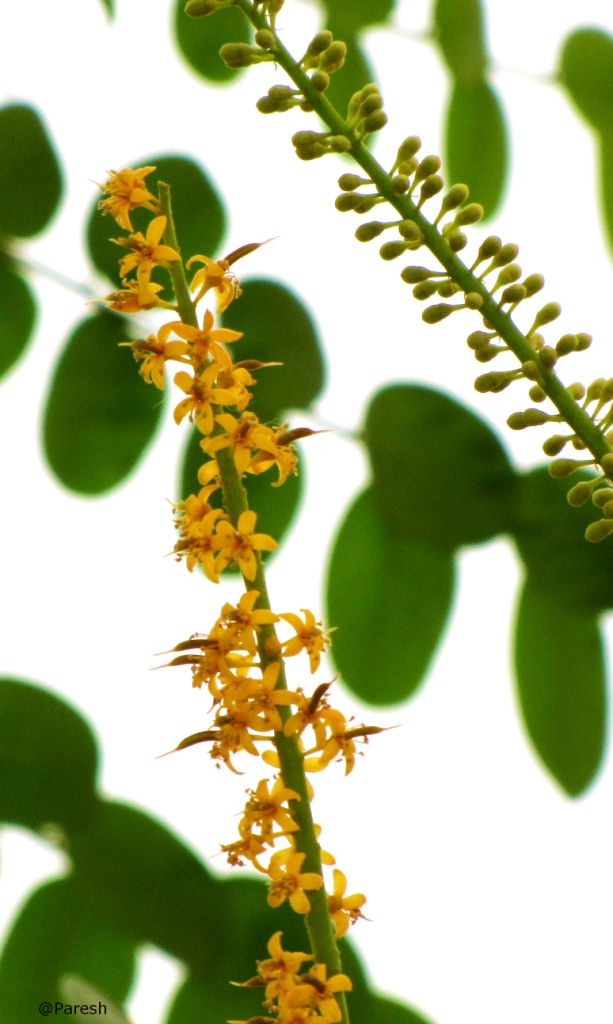
Here is the tree which is described in a perfect manner by its name. The generic name is derived from greek word dios which means ‘divine’, and pyros meaning ‘fruit’, referring to the excellent fruit of the genus. The specific name melanoxylon means ‘dark wood’. The Tendu (Diospyros Melanoxylon/टेंभूर्णी, टेमरू, तेंदू) is medium-sized handsome tree, which is also known as Black Ebony. Its small flowers appear from April to June on new shoots.

Tendu, though a minor forest produce (MFP) in Central India, is very underutilized tree. The most economically significant use of this species is that its leaves are used to roll bidis (an indigenous traditional cigarette, which uses the kendu leaf for rolling instead of paper). The leaves possess unrivalled qualities of flavour, colour, flexible and leathery texture, decay resistance and easy workability, which make them admirably suitable for wrapping bidis.

However, most of the harvest goes waste as the fruit has never been explored for its nutritional aspects. This lesser known fruit is edible & is delicious too! Once fully ripen, the yellow pulp is soft & has a pleasant and sweet taste.

Tendu is a seasonal fruit available mainly in summer. The fruit ripening takes almost a year. These edible fruits are largely eaten & disseminated by birds, notably hornbills. The tree produces good seed in alternate years. The fruits and powdered seeds are sold in local markets and eaten. 

The tree is deciduous or evergreen depending on its habitat. In a dry locality, it is leafless for a short time in the hot weather, regaining its leaves in May-June. In a moist locality, it is evergreen. Though the tree has small flowers, the tree is regularly visited by insects and butterflies. It is the larval host plant for the Symphaedra nais & Spindasis vulcanus butterflies.

The tree has been revered in Ayurvedic medicine. The seeds have been prescribed as a cure for mental disorders, nervous breakdowns and palpitations of the heart. The fruits have a cooling and an astringent effect. Dried flowers are reportedly useful in urinary, skin and blood diseases. The bark is astringent; its decoction is used in diarrhoea. Its regeneration is through seeds, cuttings and root suckers. Soaking seeds for about 12 hours in cold water improves germination. Stump planting has been found to be as good as direct seeding. 

Tendu is the most widely distributed and tolerant species when considered to soil requirements. It grows on poor denuded soils, hot and dry hill slopes, stony soils and also heavy clays. It demands light; it is drought and frost hardy but sensitive to water-logging. It is coppiceable & tolerance to pruning makes it a good fodder tree. The tree also pollards well, although the growth of the pollard shoots is slow. Its cultivation on field boundaries or distributed in field crops, such as oilseed and cereal crops, appears to be a feasible and attractive proposition. Its deep tap-rooting habit would minimize competition with annual crops. It gives good quality charcoal. 

The fruit tree being rich in nutritional, medicinal and processing qualities can play a very significant & vital role in the livelihood security of the rural communities through enhanced household income, employment generation and environmental protection. Tendu fruits have a great potential for commercial cultivation. In fact, plantation of Tendu tree along with other local fruits of our region like Ber, should be done in city gardens and residential areas.

Every Day is Environment Day!!!

A tree-lover needs no occasion for tree plantation. This 31st May, my father, Dr Prashant Phalak retired from his services. As per his wish, he wanted to plant 58 trees on his retirement. This idea was so fascinating that his office colleagues and staff also decided to volunteer for the same.

Early morning of 31/05/2017, we all with the Native saplings, reached the venue, which was a Municipal Corporation space reserved for senior citizen. Slowly people started gathering and soon, members of Senior Citizen Club joined us too. They all were inquisitive about the saplings' name and growing techniques.

So, around 63 saplings were planted by a group of 18 self-motivated tree lovers. The home grown saplings of Banyan, Peepal, Mango, Pongam tree, Jackfruit, Red Silk-Cotton tree, Arjun, Mahua, Indian Tulip, Indian Cherry, Jamun, Wild Date Palm, Curry Leaf, Indian Cork tree, Tamarind, Drumstick tree etc. were planted in the soil. We usually plant a sapling with a plastic bottle which is cut from base, obviously to facilitate the watering process. This method helps a lot in summer as you just need to pour water into the bottle and over the period of time, water slowly percolates near roots of the saplings. I have learned and adapted these new methods because We are not interested in mere Plantation. Hence we need to think about the nurturing of the saplings also. Each & every planted sapling will be looked after.

Here are the snapshots of the event...


This event inspired few of the members and they also wished to plant few Native trees. Some of them visited my small nursery where I grow my own saplings and learned some of the seed germination and plantation techniques. So astonished to see the trees we have planted so far, Dr Deshmukh and Dr Jadhav decided to plant few saplings near their office premises. My father not only donated 40 saplings to them, but happily helped them to plant the saplings on occasion of World Environment Day. What a day!


5th June is not just a tree plantation day. Let us hope & try to look after the planted saplings till next Environment Day. But as said earlier, it is very easy to plant a sapling, but a way more difficult to nurture it! Hopefully, We all will look after the saplings and see them grow into trees..! :)

The Beauty Leaf

As the name suggests, Indian Laurel (Calophyllum Inophyllum/उंडी, नागचाफा) has attractive and beautiful foliage. Because of its decorative leaves, fragrant flowers and spreading crown, it is best known as an ornamental plant. But this plant has more to its credit.

Also known as Sultan Champa, it is a large evergreen tree native to southern coastal India. It is a low-branching and slow-growing tree with a broad and spreading crown. Due to its slow growth & ornamental appearance, the tree is often planted in urban areas for beautification. It is valued for its deliciously scented snow-white flowers that are reminiscent of orange blossom. The fragrant flowers have been prized as an adornment and as a perfume. But the cherry on cake is its flowering can occur year-round. If not year-round, usually two distinct flowering periods are observed, in late spring and in late autumn. 

Besides being a popular ornamental  tree, its wood is hard & strong and has been used in construction or boat-building. It grows best in sandy well drained soils in coastal areas but will tolerate clays, calcareous soils and rocky soils. It is also found higher up the rivers along river margins. The tree demands light and prefers full sun. It is sensitive to frost and fire. It tolerates occasional water-logging in coastal areas.

Indian Laurel is a multipurpose plant, and is harvested from the wild for local use as a medicine and source of materials. The tree is planted for shade and for reforestation & afforestation. Also used to provide shelter from the wind and as an efficient shore protector in most places. The mature fruit is burned as a mosquito repellent. The fruit is a source for bio-diesel is used in treating skin disorders, diarrhea, osteo-arthritis, rheumatoid arthritis, Kapha and Pitta imbalance disorders and more.

The seeds yield viscous oil, known as Domba oil, which is of excellent quality for soap manufacture; it is also used as an illuminant and in local medicine. It may be employed as a remedy for rheumatism, ulcers and skin diseases. Bark is said to be an astringent. A decoction of the bark and latex is used medicinally, internally against diarrhoea and after childbirth, externally against skin and eye diseases and rheumatism. Leaves, flowers and seeds are sometimes also used in local medicine. 

Beauty leaf usually propagated by seeds or cuttings. It makes a good specimen for street, parking lot as a shade tree and is both wind and salt tolerant, making it especially useful for coastal locations. It becomes twisted and contorted when exposed to constant wind, creating an interesting specimen. Beauty leaf is sometimes used as a tall hedge or windbreak around tennis courts and similar places. It could be used more often as an urban street and garden tree.

The Tree with Stars!

From a distance, the flowers may appear like stars or snow flakes on a tree giving a beautiful appearance to the tree. This summer-bloomer is easy to spot either due to the flowers or its typical pods. Sweet Indrajao or Pala-Indigo (Wrightia Tinctoria/ काळा-कुडा, दुधी) is a small, deciduous tree with white, fragrant flowers. Due to its small size, the beauty & medicinal properties, the tree strongly needs to be introduced to urban areas.

When in bloom, it is one of the spectacular beauties to see. You just can't take your eyes off the tree. The fruits appear in pendulous pairs and coherent only at the tip. The hairy seeds are released as the fruit dehisces. 

It is a good agroforestry species as it inter-crop well. It can stand a wide range of soil types and is suitable for arid, semi-arid and moist regions, especially dry sandy sites or hillsides and valleys. The tree parts are known to be used as food in many regions. The flowers, leaves, fruits and seeds may be eaten as vegetables. The branches are trampled into the puddle soil in rice field for green manuring. Thus it acts as a soil improver. It coppices well & grows moderately fast. The leaves are lopped for livestock fodder.

The tree is known as Dudhi in India because of its preservative nature. Supposedly a few drops of its sap in milk prevent curdling and enhance its shelf life, without the need of refrigeration. The leaves yield a blue dye called Pala Indigo.

The pods contain floss or cotton-like substance, which is used for stuffing cushions. The liquid latex of tree can be used as a renewable source of hydrocarbons and intermediate energy resources. Latex is also a source of rubber. It is also useful in dyes & tanning industries.

In Indian traditional medicine, the bark and leaves are used to treat psoriasis, stomach pains and dysentery. The seeds are said to be aphrodisiac and anthelminthic. Seeds also yield deep red, semi-drying oil, which has medicinal value. 

So many uses and relatively very easy to propagate from seeds. Isn’t it a wonderful species?! A very important & attractive tree for city gardens and tree lovers!

The Blue Mist Tree

Ironwood tree or Anjani (Memecylon Umbellatum/अंजनी) is a small, evergreen tree with amazing bright blue flowers and with dense, dark green foliage. The tree is a predominant arboreal species in the dry evergreen and semi-deciduous tropical forests along the western and eastern coasts. It is also known as ‘Pride of Matheran’ as it is found in abundance at the famous hill station Matheran, in Maharashtra.

The flowers are mildly scented and are so beautiful that they look almost unreal. The tree produces showy clusters of tiny purple flowers, which are grouped in great quantity in axillary umbrellas, close together and compact, appear in the lower part of the branches having no leaves. The trees bloom once or twice a year and are then indeed a beautiful sight. As the flower petals are shed, the soil below appears purple in colour. May be that’s why the tree is also called Blue Mist tree. 

The fruits of Ironwood tree are small, about 1cm and are green, turning red then black as they ripen. The fruits are pulpy, astringent & edible and were consumed in the past during famine periods. The leaf edges look golden if held against light. All together flowers, fruits and leaves make it a wonderful play of colours. 

This tree is not only beautiful, but also useful. It provides hard timber used for making boats. Dyes employed in the textile factories are extracted from its leaves and flowers. Although the species is widespread in nature and is much appreciated by the local populations, it is relatively little known in urban localities. It is a tough species having a long tap-root system. It usually & easily reproduces by seeds and the growth is moderately fast. 

The tree had a long history of traditional uses for wide range of diseases. It has been proved that various parts of the plant were used in traditional systems of Ayurveda to treat various ailments. In recent years it has been experimentally proved that the plant possess analgesic, anti-inflammatory, wound healing, hypoglycemic, antimicrobial, anti-spasmodic, nephro-protective and hepato-protective activity. In Ayurveda, the leaves are used as a cooling astringent and are given in leucorrhoea & gonorrhea. The leaves are reported to possess antiviral activity and also used in snakebite. The seeds are used to cure cough and sedative. Anjani is one of the important medicinal plants used by Paliyan tribes in Sirumalai hills of Eastern Ghats of India, especially for skin diseases.

We should not underestimate its potentiality as Agroforestry species. The tree can be used as windbreaks at farms. Also it does not compete with adjacent plants for water due to the long tap-root. Without doubt, it is an ornamental plant having showy blooming which, almost entirely, covers the branches in the part bearing no leaves. The flowers and fruits are visited by bees, butterflies and birds; increasing its natural beauty beyond limits! 

The Mountain Tree

In Hindu mythology, it is believed that while traveling to Lanka, the tree sprouted from the drop of nectar that fell from the bodies of the God Rama’s monkeys, which were restored to life by Indra, the supreme king of the Hindu gods. Hence the name Indrajao or Indrajav. Though a well known species in ancient literature of Ayurveda; it is a beautiful and impressive species in first place. Indrajao or Kurchi tree (Holarrhena Pubescens/इंद्रजव, कुटज, पांढरा कुडा) is a deciduous, small tree. 

The flowers are aromatic & bright white which turn creamish yellow as they age; with oblong five petals rounded at the tip. White flowers appear in corymbose cymes at the end of branches. Profuse flowering can be seen from April to July. Fruits are paired, dehiscing follicles hanging from the stalk. 

The flower of Indrajao reminds one of an introduced genus Plumeria, commonly known as Frangipani. But similar appearance can not guarantee the virtues. An introduced species is introduced after all. How can it compete or even match the goodness of native Indrajao..?!

Widely known in Ayurveda by the name Kutaja; its numerous healing properties has been mentioned in the Vedas. It has been used to treat several gastro-intestinal diseases for hundreds of years and is still used by several Indian tribes to cure ailments like epilepsy, anemia, skin infections and cholera, apart from digestive problems. It is a one of the best drug for Amoebic Dysentery or Diarrhoea. The tree is also useful in Rheumatic Arthritis & Osteoarthritis. Indrajao also possesses potent immuno-stimulant property. Its scented white flowers improve appetite and its seeds act as a cooling agent. The tree is propagates with seeds. The seeds should be soaked in cold water for 24 hours and then sown. This will increase the germination rate.

In Sanskrit, 'Kuta' means mountain. The tree which grows in mountain region is Kutaja. Thus, it can grow in tough conditions and grows moderately fast. It tolerates variety of soils, and can grow even in degraded land. It is believed to improve the soil where it grows. Shade retards its growth but it can tolerate full sun. As an effective screen or as a taller hedge, this species can be planted in a continuous row. It does well in tough sites even with little watering and it requires almost no maintenance. Indrajao with its short stem, many branches and little broad crown converts the corner of a residential area into a pictorial patch. Its bright white mildly fragrant flowers add grace to the garden. The tree performs well in the urban environment.

The Pink Pearl!

Indian Cherry (Cordia Dichotoma/भोकर, गोंधण, लसोडा) is a medium sized, almost evergreen tree with a short bole & spreading crown. It is a very important species when it comes to avifauna and arboreal animals.

The flowers are small, short-stalked, bisexual, white in colour. Flowers open only at night, hence hardly noticed. Fruits are sweet, sticky & edible; yellow or pinkish-yellow shining globose which turns black on ripening. The immature fruits are pickled and are also used as a vegetable. The tree shed leaves for a short period in early summer. It has elliptical to broadly ovate shaped, bright green leaves.

Being a quick-growing fruit tree, performing well under semi-arid conditions, Indian Cherry is suitable for planting along boundary & farm roads. The tree coppices and pollards well. The leaves are fed upon by butterfly larvae of the Oakblue butterfly and are also lopped for fodder. The seed kernel has medicinal properties and has potential as cattle feed. It is often cultivated for its fruits. It is propagated by seeds. Young seedlings are damaged by browsing and fire, but have good power of recovery from these injuries.

There are many medicinal properties and usages of Bahuvaraka mentioned in traditional literature of Ayurveda and Materia Medica. The fruits are used as an expectorant and astringent. They are also considered useful for treating all diseases related to the lungs. In Unani medicine, the fruits are considered to be anthelmintic, diuretic, expectorant, anti-inflamatory & purgative. They are used for treating dry cough, diseases of the chest and urethra, in biliousness and chronic fever, joint pains and diseases of the spleen as well. The inhabitants of Bhadrak District in Odisha take the fruit juice orally as a blood-purifier. A decoction of Indian Cherry bark is considered useful for the relief of dyspepsia and fevers, as well. It is also reported to possess anti-diabetic, anti-ulcerative, anti-inflammatory, immune-modulator and analgesic activity.

Though small, the flowers are delicately beautiful; which attracts bees and butterflies. When in season, various birds and arboreal mammals tend to be the greatest enthusiasts of the sticky pink fruit. Being as valuable as a pearl to our Environment, the tree might have given the name 'Pink Pearl'! Truly its a gem for tree-lovers!! :) 

The Trees for Taste

Here is a tasty treat for you that you will surely enjoy! :)

Although it may not be what you would choose for an afternoon snack, we consider Lemons (Citrus Limon/लिंबू) as powerhouses when we want to bring out the flavor of other foods. Lemon tree is becoming more and more popular as landscaping plant, offering not only fruit but an attractive form of year-round, glossy, deep green foliage and fragrant flowers that would rival any!

Lemons are oval in shape and feature a greenish-yellow, textured outer peel. Like other citrus fruits, their inner flesh is encased in 8 to 10 segments. While most of them are tart, acidic & astringent, they are also surprisingly refreshing. Slices of Lemon are served as a garnish on food or with iced or hot tea, to be squeezed for the flavorful juice.

The fruit is very nutritional. It contains vitamin A, B complex, C and E with number of minerals like Potassium, Phosphorus, Magnesium, Calcium, Sodium, Iron, Selenium, Manganese, Copper, Zinc etc in good quantity. Probably that is why it is used tremendously in cooking. A drink made from Lemon juice a cool, refreshing one. Lemon juice, fresh, canned, concentrated & frozen or dehydrated & powdered, is primarily used for lemonade, in carbonated beverages or other drinks. It is also used for making pies and tarts, as a flavoring for cakes, cookies, cake icings, puddings, sherbet, confectionery and preservatives.

But beyond cooking, in the world of traditional medicine, the lemon is widely known for its healing powers and is used in many different ways. Lemon juice is valued in the home as a stain remover, and a slice of lemon dipped in salt can be used to clean copper-bottomed cooking pots. Lemon juice has been used for bleaching freckles and is incorporated into some facial cleansing creams. Lemon peel is the source of lemon oil, pectin and citric acid. Lemon oil is added to frozen or otherwise processed lemon juice to enrich the flavor. It is much employed as a flavoring for hard candies. It is also much used in furniture polishes, detergents, soaps & shampoos. It is important in perfume blending, especially in colognes.

Not only the fruit juice but oil expressed from lemon seeds is also employed medicinally. Lemon juice is widely known as a diuretic, anti-scorbutic, astringent and febrifuge. Lemon juice in hot water has been widely advocated as a daily laxative & preventive of the common cold. Lemon juice and honey, or lemon juice with salt or ginger, is taken when needed as a cold remedy.

The lemon tree is a very hardy tree. It doesn't require much care and grows moderately fast. It has the reputation of tolerating very infertile, very poor soil. It is easily propagated from seeds.

The Lemon tree is a suitable species for urban home gardens. But it can also be a good agroforestry tree. The fruit peel & foliage can be used a s a cattle-feed. The aromatic flowers may serve as bee-forage. The tree also controls soil erosion with the help of dense network of roots. Furthermore, it gives green manure which is useful in farming. It is a ideal species for fencing or as a windbreak.

The another species to add taste to your food is the Kokum tree (Garcinia Indica/कोकम, आमसूल, रातंबा, भेरंड) which is a graceful, tall evergreen tree. It is indigenous to the Western Ghats region of India, along the western coast which is gifted with rich soil, adequate rainfall and very good sunshine.

Kokum tree has dark green foliage & a pyramidal shape. The tree blooms in winter and the fruits ripen in summer. The Kokum fruit or Ratamba looks similar to small variety plum and has dark purple color when ripe. Fruits are harvested when ripe and only the rind is preserved by drying in the Sun. That is Kokum or Aamsul. Sometimes salt is rubbed onto the rind to speed up the drying process. It is used as a slightly sour spice in recipes from Maharashtra that yields peculiar taste and dark red colour. It is preferred in curries and other dishes from Konkan. It is widely used in Konkani cuisine, in Gujarat and some cuisines of South India.

Kokum is mainly used as a souring agent. It has a fruity & distinctive tangy flavor. It is commonly utilized as a garnish in Indian cuisine and is an essential ingredient to a tasty local curry, Sol Kadhi. It is a popular drink used during hot summer months to quench thirst and to provide gastric relief. 

The fruit tree has culinary, pharmaceutical and industrial uses. The tree is also ornamental, with a dense canopy of green leaves and red-tinged, tender, emerging leaves. It is found in forest lands, riversides & wasteland and also gets cultivated on a small scale. It is rainfed, does not have any pest or diseases & is almost a 'zero-attention' species. It does not require irrigation, spraying or fertilizers. Those researching on the tree see it as having a bright future. It is propagated from seeds.

Kokum has a long history in Ayurvedic medicine as it was traditionally used to treat sores, dermatitis, ear infection and to relieve gastric problems like acidity, flatulence, constipation & indigestion. The tree pacifies vitiated vata, kapha, obesity, hypercholestremia, diarrhea, colic, ulcers, inflammations and hyper-perspiration. Kokum is known to strengthen the cardio-vascular system and stabilize liver function. The hydroxycitric acid present in the fruit fights cholesterol and curbs lipogenesis, thus aiding weight loss.

Kokum fruits contain rich amounts of anti-oxidants that bind with free radicals and prevent oxidative damage to body cells. They also promote cell regeneration and repair. Kokum juice is also thought to be effective against allergies due to bee stings and other insect bites, sun exposure symptoms and acidity. It is mixed with yogurt and salt to make a natural antacid, the perfect addition to spicy Indian feasts.

Kokum seed contains 23-26% oil, which remains solid at room temperature and freezes to form Kokum butter. It is extensively used in the preparations of confectionery, pharmaceutical and cosmetic industry as it works wonders on dry, chapped, sensitive, irritated or burnt skin. Kokum butter is rapidly gaining popularity over Cocoa butter as an intensive skin moisturizer. Due to its soothing and healing properties, it is also applied directly to wounds and infected areas on the skin. It is rich in healthy fats like stearic and oleic acids and can also be used as edible oil.

Kokum sherbet/juice is a healthier and far more refreshing option as compared to commercial bottled drinks. It acts as an appetite stimulant and has anti-helmintic properties. It also helps in bringing down fever and allergic reactions. Kokum juice is extremely popular during scorching summer months as it has a cooling effect on the body and shields the body against dehydration and sunstroke.

Kokum can be an excellent agroforestry species. It grows moderately fast & provide good quantity of green manure. It usually can be seen as shade or wind-break species.

Finally here is a tree which is actually not native to India. It originated in tropical Africa, including Sudan. Its the Tamarind tree (Tamarindus Indica/चिंच). Surprisd?? But that's right! The tree was so long ago introduced into and adopted in India that it has often been reported as indigenous here; and it was apparently from this Asiatic country that it reached the Persians and the Arabs who called it tamar e hind (Indian date, from the date-like appearance of the dried pulp), giving rise to both its common and generic names. Marco Polo mentions the tree in the year 1298. In the Indian Brahmasamhita scriptures, the tree is mentioned between 1200 and 200 B.C. and in Buddhist sources from about the year A.D. 650. May be due to this very very long period, the tree has become familiar to the birds, insects and wildlife if India.

It is a long-lived evergreen tree with wide, dense crown. It grows well over a wide range of soil and climatic conditions. It tolerates a great diversity of soil types, from deep alluvial soil to rocky land & porous limestone. It withstands salt spray and can be planted fairly close to the seashore. Its extensive root system contributes to its resistance to drought and wind. The evergreen habit and the beautiful flowers make it suitable for ornamental planting in parks, along roads and riverbanks.

Just like Kokum, Tamarind is mainly used as a souring agent. All kitchens of India (especially south Indian) will have Tamarind, which is used in a variety of preparations. The fruit pulp, mixed with a little salt, is a favourite ingredient of the curries and chutneys popular throughout India. The ripe fruit of the sweet type is usually eaten fresh, whereas the fruits of sour types are made into juice, jam, syrup and candy. Fruit is marketed worldwide in sauces, syrups and processed foods. It has a high content of vitamin B (Thiamine & Niacin) as well as a small amount of Carotene and vitamin C. The flowers, leaves and seeds can be eaten and are prepared in a variety of dishes. 

The soft, succulent pulp is used as a confectionery and an ingredient sherbets and beverages. The fruit is equally nutritious too; containing protein, fat, carbohydrates, fiber. The tender pods can also be eaten as a vegetable, cooked or pickled. Once the seeds are extracted and the pods removed, Tamarind pulp can be stored for several months in a compressed form. Ripe tamarind fruit has a widely recognized and proven medicinal value. The fruit is said to reduce fever and cure intestinal ailments. Its effectiveness against scurvy is well documented. It is a common ingredient in cardiac and blood sugar reducing medicines. The pulp is also used as an astringent on skin infections. It is even used as a laxative. Leaves and flowers, too, are useful as they are both edible and the leaves make a good poultice for boils; also an infusion from them makes a fine yellow dye which is used to give a green colour to silks previously dyed with indigo.

The foliage has a high forage value and is coppiciable. Flowers are reportedly a good source for honey production. It also provides an excellent charcoal. The tree usually employed as shade species or as a wind-break. It is easily propagated by seed.

Without these trees, there would be hardly any taste left..not only in our cuisines, but also in Nature! Yummy na?! :-P

An Apple Or Two

Bael or Holy Fruit or more aptly, Golden Apple (Aegle Marmelos/बेल) is the only member of its monotypic genus Aegle. It is one of the most useful and well known of the Indian tree. Almost every part of the tree is put to some use and it has been used very widely for thousands of years in India. It bears sacred aromatic leaves, fragrant flowers and edible fruits.

The Bael is considered as a sacred tree by the Hindus. They offer its leaves to Lord Shiva during worship. Almost every Hindu temple in India would have one or more Bael trees in their courtyards.

In the Hindu religion, the Tri-foliate leaves typical of the Bael is seen as the 3-pronged Trident (Trishula) that Lord Shiva holds in his right hand. The Trident symbolizes his three fundamental Powers (shakti) of Will (ichchha), Action (kriya) and Knowledge (gyana). The Trident also symbolizes the past, the present and the future. It is believed that the leaves absorb foul gases from the atmosphere and keep it clean and salubrious. 

Though more prized for its medicinal virtues than its edible quality, this interesting tree is, nevertheless, of sufficient importance as an edible fruit too! Bael fruits contain nutritious pulp and is eaten fresh. It is rich in carbohydrates, fibres, proteins, calcium, iron, phosphorus, carotene, thiamin, riboflavin, niacin and vitamin C. A popular drink called sherbet in India, is made by beating the seeded pulp together with milk & sugar. The drinks are consumed perhaps less as food or refreshment than for their medicinal effects. Mature but still unripe fruits are made into jam, marmalade, jelly, pickle or syrup, likewise for both food and therapeutic use. 

The tree is known to have medicinal properties. In Ayurvedic medicine, it has been used to cure diarrhea, dysentery, hemorrhoids, hepatitis, colitis, eye & ear infections and as a brain & heart tonic.

Being a deciduous tree, Bael provide green manure, or leaves can be used as fodder. An essential oil is extracted from the leaves which is used in cosmetics. Other commercial products from the tree include gum, tannin & dyes. A mucous is obtained chiefly from the fruit which is used as cement when mixed with lime; it is also mixed with water paints as a drier and to give a glossy finish; it is also used as a soap substitute. This tree is also a larval foodplant for the Indian Swallowtail butterflies.

In India, Bael has the reputation of thriving where other fruit trees cannot survive. The tree has no exacting cultural requirements, doing well with a minimum of fertilizer and irrigation. The Bael seems to be relatively free from pests and diseases. The tree is commonly grown from seed.

Another tree which displays similar type of fruits is Curd Fruit or Wood Apple (Limonia Acidissima/कवठ, कैट) which is a large deciduous tree.

In fact this term 'Wood apple' is also used for the Bael fruit. But it is more appropriate for the Curd Fruit. Interestingly, the tree is also the only species within the monotypic genus Limonia, just like Bael tree.

Wood Apple also bears edible, nutritious fruits. The fruit is eaten fresh or is used to make jams, jelly, syrups etc. Other uses include gum, dyes, tannin. The gum is said to be useful in preparation of water colours, and to be preferred to Gum Arabic. Oil is said to be obtained from the leaves and the seeds. The hard dry shells of small fruits are made into snuff boxes. The tree flowers abundantly with tiny, beautiful flowers; which attracts many birds and insects.

Wood Apple has traditionally been used in many herbal remedies as a digestive stimulant, astringent, anti-dysenteric, anti-hemorrhoidal and as an anti-diarrheal. The fruit and the leaves are used in herbal preparations. The tree is propagated by seeds.

Both these trees, Bael and Wood Apple are perfect trees for roadside plantation.

The Saga Tree

Coralwood tree is a beautiful and unfortunately an underutilized tree of India. This useful tree has long been an important tree in Southeast Asia since ages. It is a hardy, fast growing tree that requires relative little maintenance. The beautiful tree has red, glossy seeds due to which it is also known as Red Bead tree (Adenanthera Pavonina/रतनगुंज, थोरला गुंज).

The tree is not only used for ornamental purposes, but it has many other uses also. Firstly, Red Bead tree is very beneficial to our environment. It is a valuable agroforestry species. The tree can fix the atmospheric nitrogen and thus help rejuvenate soil. Further, it also provide useful mulch. The small leaves break down easily, giving a good green manure. It is compatible with most tropical field and tree crops, making it suitable to use in integrated production systems. It can be interplanted among field & tree crops such as spices, coffee and coconuts or along field borders as part of a windbreak . The tree resprouts new branches easily & so is not damaged by harvesting for fodder. The leaves can be used a supplemental source of fodder, as the leaves are fairly high in digestible crude protein (17-22%). It also acts as a host plant for butterflies like Plain Nawab. 

There are historical accounts from Southeast Asia and Africa of using all parts of Red Bead tree for traditional medicines. In our Ayurvedic medicine, various parts of the tree are used against rheumatism, gout, headaches, migraines, dysentery, diarrhoea, tonsillitis etc. In Ancient India, the ground seeds are used to treat boils and inflammations. The bark was used to wash hair as it contains saponin. A red dye is obtained from the tree and used by the Brahmins in India to make religious markings on their foreheads and for dyeing clothes. The tree also yields very good charcoal. 

The interesting fact about its red, glossy seeds is- They were used in ancient India for weighing gold, silver & diamonds, because the seeds are curiously similar in weight, four seeds making up about 10 gramme. In fact the name 'Saga' is traced to the Arabic term for 'goldsmith'. Isn't that funny?! The seeds are also used as beads in jewellery, necklaces, rosaries and as toys.  The ground seeds can produce an oil which was used as an industrial lubricant. Seeds are probably eaten and dispersed by birds. The seed coat is extremely hard. For cultivation, manual scarification &/or immersing the seeds in boiling water for one minute may increase the chances of germination. The hardy tree can grow on variety of soils..from deep, well-drained to shallow & rocky.

The Red Bead tree is extensively cultivated as an ornamental for planting along roadsides and in urban areas, though notably for its red, glossy seeds; the flowers are equally beautiful in light creamy yellow to orange colour, with a sweet fragrant smell. Individual flowers are small and star-shaped, with five tiny petals. The fast growth and spreading crown of light & feathery foliage offer attractive shade, making it suitable for plantation in gardens. 

The Devotional Fruits

The use of this tree in India can be traced back to as early as 1,000 BC. Indian Jujube, Indian Plum or more common, Ber (Ziziphus Mauritiana/ बोर, बोरी) is a beautiful, spiny, evergreen medium-sized tree. The tree whose greatest quality is its ability to thrive and produce fruits in arid or semi-arid regions.

The Ber is an important tree in the dry regions as it grows readily & quickly on poor ground. It grows vigorously and has rapidly developing & exceptional deep taproot system, a necessary adaptation to drought conditions. Ber tree may be erect or wide-spreading, with gracefully drooping thorny branches & zigzag branch-lets. It can withstand severe heat, frost & drought, hence it is planted in dry areas and on sites unfit for other crops. It coppices very well and can be easily propagated by seeds or root suckers.

Ber has number of uses to its name. An apt description of its value is that Ber produces the three vital 'f's that desert dwellers require- fruit, fodder and fuel. It bears heavily with nutritious fruits, excellent as Agroforestry species, one of the few trees that can be used to host lac insects, makes good fodder and has some medicinal properties too! One idealist describes this species as "a gift of mother nature which symbolizes the productive capacity of the seemingly infertile ecosystem".

The fruit is nutritiously rich & delicious in flavor. It contains vitamin C much higher than apples or citrus fruit & second only to guava. It is also high in Beta Carotene & vitamin A. The ripe fruits are mostly consumed raw or even dried, but are sometimes pickled or used in beverages, candy making .

This thorny tree makes good live fencing & is an excellent Agroforestry tree to use in hedges. The tree has been planted for shade and windbreaks. Its a suitable species to aid in fixation of coastal dune sand. Its leaves are readily eaten by camels, cattle, sheep, goats and are considered nutritious. These leaves also make excellent mulch as they bring deep seated nutrients to the surface layer. In India & Queensland, the flowers are rated as a minor source of nectar for honeybees. The honey is light and of fair flavor. The Indian Jujube is one of several trees grown in India as a host for the lac insect, Kerria Lacca. The leaves are also gathered to feed tasar silkworms. Highly priced tasar silk is the only silk commercially exploited in the tropics. The tree also makes excellent charcoal.

In traditional medicine of Ayurveda, the leaves, fruits, bark & even roots are used against various ailments. Ber is used to treat a variety of ailments including: colds and flu, malnutrition related diseases in children, convulsions, indigestion. The oil from seeds is believed to have potential as a treatment for skin disorders or even as biodiesel.

Other uses include tanning, dyes and shellac which is obtained from resinous lac, in the manufacture of gramophone records, polishes, fine lacquer work, sealing wax and varnishes. An oil is pressed from seeds which, due to purity, lack of odour, resistance to rancidity, is used as natural base for creams & ointments, pharmaceuticals, heating oils, plasticizers, fire retardants, high pressure lubricants. A wax is also obtained from seeds, used in candles, polishing wax for cars, furniture, electrical insulators etc.

In our great epic Ramayana, there is a mention that Lord Rama delightedly had the half-eaten fruits, ber, from Shabari, an old tribal devotee of Rama. These fruits have further significance in the epic when Meghnad (Ravana's son) attacks the two brothers and only Lakshmana becomes unconscious, but Rama is saved because he have had the Jhootey ber of Shabari. This mention shows the importance of the tree.

Despite of being such a useful tree, Indian Jujube is never planted or made to grow near house & city gardens. In fact, the tree plays important role in ecosystem. It attracts number of small birds and insects, including butterflies & moths. Other than Babool, it is the most preferred habitat by sparrows & alike small birds. The adjacent photograph shows a natural habitat of House Sparrow comprised of the Indian Jujube. Some might think that the tree will compromise the beauty of their garden. But the truth is- Indian Jujube will increase its beauty with lots of small birds!

The Flamingo Bill

The Agati is an awesome tree with beautiful, showy and eye-catching flowers. It is also known as Flamingo Bill (Sesbania Grandiflora/हातगा, अगस्ति) due to resemblance of its flowers to the bill of Flamingo birds. It is a very fast growing tree that produces forage, food, fertiliser, green manure and holds promise for reforesting eroded wastelands throughout tropics.

The Agati tree combines very well with agri-culture. It is often maintained in gardens and around crop fields for its contribution of nitrogen. It has excellent root nodulation which fixes nitrogen. It is a well-suited perennial for dense planting, growing for short periods and ploughing under to improve soil before planting food crops. The light shade cast by its canopy does not block much light, allowing the growth of companion plants. Falling leaflets, flowers & pods make excellent green manure or mulch and recycle nutrients to the ground, thus improving soil fertility. Furthermore, it is well-suited for ornamental purposes due to its giant showy flowers. Hence Agati is one of the perfect trees suitable for plantation in urban societies & gardens. It has also been used as a living fence and to shade nurseries & some crops such as coffee, tea, cocoa, and as windbreaks for citrus, banana & coffee.

Be it its leaves, seed pods or flowers, all are edible and nutritious too! Flowers are the most widely used part and are eaten as a vegetable in India. It can be used as a common vegetable, even raw or steamed & cooked in soups, bhajiyas and stews after the stamen & calyx have been removed. Hence these flowers are sold in the market. Young leaves can also be eaten, usually chopped fine & steamed, cooked or fried. Tender pods are eaten as string beans.

Leaves of Agati serves the purpose of fodder not only for livestock but for butterflies also. It is an excellent supplement to dairy cows fed predominantly grass hay. The tree produces leaves for fodder within 4 months of establishment. Even tender pods are valued for nutritious fodder. The leaves contain 36% crude protein (dry weight) & vitamin A. The most effective method of feeding the fodder to ruminants is to supplement with it up to 15-30% of the total diet. Because of its high protein content, Agati should not be solely fed to animals but should be combined with a roughage that is low in protein and high in energy, such as rice or maize straw.

The Agati tree also provides a clear gum which is used in foods, adhesives and tannins. Its medicinal properties include antibiotic, anthelmintic, antitumour and contraceptive actions. The bark is considered as a tonic & antipyretic, a remedy for gastric troubles, colic with diarrhoea & dysentery. In India, all the parts of Agati are reputed to cure night blindness. The root is a well-known medicine for malaria. The principal medicinal effects are due to the tree’s astringency, hence it is used against inflammation, venom, bacterial infections and tumors.

Agati is outstanding in its ability to tolerate water-logging and is ideally suited to seasonally waterlogged or flooded environments. When flooded, they initiate floating adventitious roots and protect their stems, roots and nodules with spongy, aerenchyma tissue. Another outstanding feature is its tolerance of both saline & alkaline soil conditions. Agati can be propagated easily by cuttings & seeds.

There is another species from the same genus which has got some controversy to its origin..Common Sesban (Sesbania Sesban/शेवरी, जयंती). Though some experts consider this tree as a exotic species, it has a long history of use in India, primarily as a green manure and a source of 'cut and carry' forage.

Common Sesban has many similar properties to that of Agati tree..like food, fodder, fertilisers, nitrogen fixation, ornamental, windbreak, shade and even some medicinal properties. It has beautiful yellow coloured flowers and this coppiceable tree can be propagated easily by seeds.

In India, Sesbanias have had a long history of agricultural use, primarily as green manures and as sources of forage. Being legumes and ability to improve soil condition, these trees has proved to be popular as a fallow species and as a important agroforestry species.