Showing posts with label Sacred. Show all posts

The Yellow Snake Tree

Trumpet flower tree or Padal (Stereospermum Tetragonum/पाडळ) is a moderate sized deciduous tree, often buttressed. Flowers are fragrant, yellow with reddish-purple veins and velvety at the mouth, trumpet shaped in panicles. Flowering occurs during May to July. The fruit is long, curved and brown in colour. This, probably, is the source of its common name, Yellow Snake tree.

Padal is often grown as an ornamental tree, valued for its fragrant flowers. It grows best in a sunny position, tolerating light shade. The tree succeeds in a wide range of well-drained soils. The tree can survive forest fires. It is one of the commonest trees to be seen in the savannah lands of India, apparently able to shoot up yearly in spite of fire, and to grow on into a tree if only a short period of immunity from fire can be obtained. 

The tree can be propagated easily from seeds, cuttings and root-suckers. Its flowers and tender young fruits are known to be edible and eaten as a cooked vegetable. The Padal provides an excellent fuel; the wood also makes a good charcoal.

The tree is associated with the famous Padaleeshwarar temple at Tiruppathiripuliyur (pathiri is tamil name of Padal), Cuddalore in Tamil Nadu. It is believed that Goddess Parvathi reached Tiruppathiripuliyur after worship of 1008 Shiva sthalams. She worshipped the Lord Padaleeshwarar installed under a Padal tree. After years of penance, Lord Shiva appeared and he united with the Goddess under the sacred Padal tree, which is now the sthala vruksha (holy tree) of the temple. The tree is associated with the Ekapatala, sister of Goddess Parvathi who took only one Patala leaf for food. The tree is also sacred to the Jains, as the 12th Tirthankara - Bhagwan Vaspujay Ji attained enlightenment under this tree. 

The Padal root is one of the ten ingredients in reputed Dashamula, a popular Ayurvedic formulation for fatigue. Padal is reported to be astringent, cardiotonic, cooling, diuretic and tonic. It relieves the three doshas, overcomes anorexia, difficulty in breathing, oedema, piles, vomiting, hiccough and thirst. Parts from the tree are used as anti-inflammatory, anti-asthmatic, antiemetic and febrifuge; also in perfumes and medicines. The flower is used for removing intestinal worms and is also used to treat mental disorders, jaundice and venereal diseases. 

The sacred & hardy tree easily performs well in the urban settlements and grows moderately fast. Its beautiful fragrant flowers add grace to the city gardens. 

The Mountain Tree

In Hindu mythology, it is believed that while traveling to Lanka, the tree sprouted from the drop of nectar that fell from the bodies of the God Rama’s monkeys, which were restored to life by Indra, the supreme king of the Hindu gods. Hence the name Indrajao or Indrajav. Though a well known species in ancient literature of Ayurveda; it is a beautiful and impressive species in first place. Indrajao or Kurchi tree (Holarrhena Pubescens/इंद्रजव, कुटज, पांढरा कुडा) is a deciduous, small tree. 

The flowers are aromatic & bright white which turn creamish yellow as they age; with oblong five petals rounded at the tip. White flowers appear in corymbose cymes at the end of branches. Profuse flowering can be seen from April to July. Fruits are paired, dehiscing follicles hanging from the stalk. 

The flower of Indrajao reminds one of an introduced genus Plumeria, commonly known as Frangipani. But similar appearance can not guarantee the virtues. An introduced species is introduced after all. How can it compete or even match the goodness of native Indrajao..?!

Widely known in Ayurveda by the name Kutaja; its numerous healing properties has been mentioned in the Vedas. It has been used to treat several gastro-intestinal diseases for hundreds of years and is still used by several Indian tribes to cure ailments like epilepsy, anemia, skin infections and cholera, apart from digestive problems. It is a one of the best drug for Amoebic Dysentery or Diarrhoea. The tree is also useful in Rheumatic Arthritis & Osteoarthritis. Indrajao also possesses potent immuno-stimulant property. Its scented white flowers improve appetite and its seeds act as a cooling agent. The tree is propagates with seeds. The seeds should be soaked in cold water for 24 hours and then sown. This will increase the germination rate.

In Sanskrit, 'Kuta' means mountain. The tree which grows in mountain region is Kutaja. Thus, it can grow in tough conditions and grows moderately fast. It tolerates variety of soils, and can grow even in degraded land. It is believed to improve the soil where it grows. Shade retards its growth but it can tolerate full sun. As an effective screen or as a taller hedge, this species can be planted in a continuous row. It does well in tough sites even with little watering and it requires almost no maintenance. Indrajao with its short stem, many branches and little broad crown converts the corner of a residential area into a pictorial patch. Its bright white mildly fragrant flowers add grace to the garden. The tree performs well in the urban environment.

We TWO!

In the soaring heat of May, we are experiencing a cool breeze. How? Yes, here are we again..celebrating Gifting Trees...'s second anniversary.

Marking the two years of Gifting Trees, we are adding a new segment in conserving native trees... Tree Rescue!


This is the status of our sacred native trees, isn't it? WE all, educated illiterates (पढ़ेलिखे गवार, साक्षर अनाडी) are busy in widening our highways, we are moving to big cities. And so we are cutting these trees which were planted by our forefathers. But we can't see the importance of our sacred native trees. May be hence we are habituated to plant introduced trees. But Mother Nature haven't..! She knows what's right and what's wrong. She keeps trying to plant these sacred trees with the help of birds.

But do we allow to grow trees on our walls or midway on the roads? No, we cut them. But there is another way to have these blessings of Mother Nature. We just have to transplant these saplings to a right place where the sapling can take roots freely and flourish. For example, Banyan, Peepal, Cluster Figs are species which can be seen growing on walls, buildings. Eventually either the growing saplings die due to lack of water/space or are cut/removed by humans for obvious reason. What we can do is just to transplant them carefully alongside of roads, near residential area or near a temple.

Similarly at the end of summer or just in the beginning of rains, trees like Neem, Jamun, Pongam, Ber etc have numerous seedlings grown beneath them due to their fallen fruits/seeds. Practically, it is very difficult to survive & grow under a big tree and its not advisable to just let these seedlings grow, especially in urban areas. These seedlings can easily be transferred to polybags to grow and then can be used for plantation.

We two, my father and me, have rescued about 45 saplings/seedlings till date and successfully planted few of them too! Also as today is our 2nd anniversary, we are pleased to announce that in this last year, we have planted (and grown) 18 saplings and taken care of them along with those of the previously planted.

5th May also is the Climate Impacts Day. Is that a co-incidence?! Lets Come together and Connect the dots.

Nakshatra is Forever..!

The concept of adoption of a plant is been derived from Indian cultural history. The Indian astrology is based on the concept of Nakshatras (Constellations) and Rashis (as per moon signs). There are in all 27 Nakshatras present in a year and every individual has a Nakshatra assigned to him/her depending on the date and time on which he/she is born (the tithi).

Every Nakshatra has a symbolic tree or plant that defines its connection with eternal nature. In our Indian culture there was a tradition that whenever a baby is born in someone’s home, that person was supposed to plant a tree of the same Nakshatra on which the baby was born. The person was supposed to take care of the tree as his child because it was believed that the more good and healthy the tree will grow, it will prosper more health and happiness to the child.

If these trees have been assigned to the 27 nakshatras by the Vedic Rishis, than it will be worthwhile for us to know which tree belongs to our Janma Nakshatra (Birth Constellation) and to have some idea about its medicinal values or other applications.

So the presence of the complete set of 27 trees directly creates a healthy and sound physical, mental, psychological and spiritual beings; which is the ultimate and absolute bliss to oneself and to the Earth too!

Trees corresponding to Nakshtras and Rashis :

Sr. No. : 1
Nakshatra Name : Ashwini
Moon Sign : Aries
Lord : Ketu
Tree/Plant : Strychnine tree, Poison Nut (कुचला)
Latin Name : Strychnous Nux-Vomica
It is important medicinal tree which has its mention in ancient system of medicine. The seeds of ripe fruit are poisonous, hence the name.  

Sr. No. : 2
Nakshatra Name : Bharani
Moon Sign : Aries
Lord : Venus
Tree/Plant : Amla, Indian Gooseberry (आवळा)
Latin Name : Phyllanthus Emblica


Sr. No. : 3
Nakshatra Name : Kritika
Moon Sign : Aries
Lord : Sun
Tree/Plant : Cluster Fig (औदुंबर)
Latin Name : Ficus Racemosa
The Rashi tree for Aries is Red Sandalwood (Pterocarpus Santalinus/रक्तचंदन). Being a rare species, plantation of this tree has its importance. It has tremendous medicinal properties and is mentioned number of times in Ayurveda. This tree is believed to purify air from toxic substances.
Sr. No. : 4
Nakshatra Name : Rohini
Moon Sign : Taurus
Lord : Moon
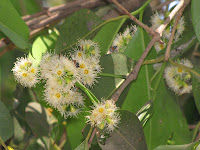
Tree/Plant : Jamun, Java Plum (जांभूळ)
Latin Name : Syzygium Cumini

Sr. No. : 5
Nakshatra Name : Mrig
Moon Sign : Taurus
Lord : Mars
Tree/Plant : Cutch tree (खैर)
Latin Name : Acacia Catechu

The Rashi tree for Taurus is Scholar tree (Alstonia Scolaris/सप्तपर्णी). It is an elegant fast-growing evergreen tree. With or without flowering, it is equally beautiful. It has many medicinal properties to its name. It is often planted as an ornament. 


Sr. No. : 6
Nakshatra Name : Ardra
Moon Sign : Gemini
Lord : Rahu
Tree/Plant : Black Ebony, Tendu (टेंभूर्णी, तेंदू)
OR
Krushnagus
Latin Name : Diospyros Melanoxylon
OR
Aquillaria Agalocha 

Sr. No. : 7
Nakshatra Name : Punarvasu
Moon Sign : Gemini
Lord : Jupiter
Tree/Plant : Velu
Latin Name : Bambusa Bambos 
It is basically a fast-growing type of grass which provide shelter place to many small birds. Its medicinal virtues are often neglected by gardeners who consider it as a messy plant. Actually speaking, it provide good quantity of mulch.

The Rashi tree for Gemini is Pala-Indigo tree (Wrightia Tinctoria/काळा-कुडा). Locally, it is also known as Dudhi. It is a small tree with white, fragrant flowers. This attractive tree has many virtues to its name including agroforestry and ayurvedic properties.

Sr. No. : 8
Nakshatra Name : Pushya
Moon Sign : Cancer
Lord : Saturn
Trees/Plant : Peepal, Sacred Fig (पिंपळ)
Latin Name : Ficus Religiosa


Sr. No. : 9
Nakshatra Name : Ashlesha
Moon Sign : Cancer
Lord : Mercury
Trees/Plant : Beauty Leaf tree, Alexandrian Laurel (नागचाफा, उंडी)
Latin Name : Calophylum Inophyllum.
It is an evergreen beautiful tree which tolerates variety of soils. It has fragrant flowers & is often planted for ornamental purpose. The oil extracted from the seeds is used as Biodiesel in USA & Europe.

The Rashi tree for Cancer is Palash (Butea Monosperma/पळस). It is a multi-purpose and decorative tree with beautifully attractive flowers and unique leaves. Being a very sacred species, this hardy tree is usually used to stabilie field bunds and to control soil erosion. It flowers in two distinct varieties - bright crimson orange coloured and yellow coloured.


Sr. No. : 10
Nakshatra Name : Magha
Moon Sign : Leo
Lord : Ketu
Trees/Plant : Banyan (वड, वट)
Latin Name : Ficus Benghalensis


Sr. No. : 11
Nakshatra Name : Poorva Phalguni
Moon Sign : Leo
Lord : Venus
Trees/Plant : Palash, Parrot tree (पळस)
Latin Name : Butea Monosperma


Sr. No. : 12
Nakshatra Name : Uttara Phalguni
Moon Sign : Leo
Lord : Sun
Trees/Plant : Payari
Latin Name : Ficus Arnottiana 
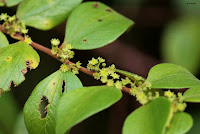
The Rashi tree for Leo is Indian Jujube, Indian Plum (Ziziphus Mauritiana/बोर). It is fast growing tree with sweet delicious fruits. The tree is a excellent agroforestry species with numerous uses to its name.

Sr. No. : 13
Nakshatra Name : Hasta
Moon Sign : Virgo
Lord : Moon
Trees/Plant : Jaai
Latin Name : Jasminum Grandiflora

Sr. No. : 14
Nakshatra Name : Chitra
Moon Sign : Virgo
Lord : Mars
Trees/Plant : Bael, Golden Apple (बेल)
Latin Name : Aegle Marmalos


The Rashi tree for Virgo is Mango (Mangifera Indica/आंबा)

Sr. No. : 15
Nakshatra Name : Swati
Moon Sign : Libra
Lord : Rahu
Trees/Plant : Arjun (अर्जुन)
Latin Name : Terminalia Arjuna

Sr. No. : 16
Nakshatra Name : Vishakha
Moon Sign : Libra
Lord : Jupiter
Trees/Plant : Nagkesar (नागकेसर) OR Wood Apple (कवठ, कैट)
Latin Name : Mesua Ferrea OR Limonia Acidissima

The Rashi tree for Libra is Indian Medler (Mimusops Elengi/बकुळ). It is a very beautiful evergreen tree with creamy white sweet-odoured flowers. The flowers hold on their fragrances for many days even after fall from the tree.

Sr. No. : 17
Nakshatra Name : Anuradha
Moon Sign : Scorpio
Lord : Saturn
Trees/Plant : Nagkesar (नागकेसर)
Latin Name : Mesua Ferrea


Sr. No. : 18
Nakshatra Name : Jyeshta
Moon Sign : Scorpio
Lord : Mercury
Trees/Plant : Semal, Red Silk-Cotton Tree (सावरी)
Latin Name : Bombax Ceiba


The Rashi tree for Scorpio is Indian Catechu (Acacia Catechu/खैर)

Sr. No. : 19
Nakshatra Name : Mool
Moon Sign : Sagittarius
Lord : Ketu
Trees/Plant : Salai
Latin Name : Boswellia Serrata


Sr. No. : 20
Nakshatra Name : Poorvashadha
Moon Sign : Sagittarius
Lord : Venus
Trees/Plant : Rattan Cane
Latin Name : Calamus Pseudotenuis (वेत)
It is a strong climber which has clustered stems. It usually need a support to climb.

Sr. No. : 21
Nakshatra Name : Uttarashadha
Moon Sign : Sagittarius
Lord : Sun
Trees/Plant : Jackfruit (फणस)

The Rashi tree for Sagittarius is Peepal (Ficus Religiosa/पिंपळ).

Sr. No. : 22
Nakshatra Name : Shravan
Moon Sign : Capricorn
Lord : Moon
Trees/Plant : Crown Flower (रुइटी, आक)
Latin Name : Calotropis Gigantea


Sr. No. : 23
Nakshatra Name : Dhanishtha
Moon Sign : Capricorn
Lord : Mars
Trees/Plant : Indian Mesquite, Khejri tree (शमी)
Latin Name : Prosopis Cineraria


The Rashi tree for Capricorn is Indian Rosewood (Dalbergia Sissoo/शिसम).

Sr. No. : 24
Nakshatra Name : Shatatarka
Moon Sign : Aquarius
Lord : Rahu
Trees/Plant : Kadam, Common Bur Flower (कदंब)
Latin Name : Neolamarckia Cadamba


Sr. No. : 25
Nakshatra Name : Poorvabhadrapada
Moon Sign : Aquarius
Lord : Jupiter
Trees/Plant : Mango (आंबा)
Latin Name : Mangifera Indica


The Rashi tree for Aquarius is Indian Mesquite (Prosopis Cineraria/शमी)

Sr. No. : 26
Nakshatra Name : Uttarabhadrapada
Moon Sign : Pisces
Lord : Saturn
Trees/Plant : Neem (कडुनिंब)
Latin Name : Azadirachta Indica


Sr. No. : 27
Nakshatra Name : Revati
Moon Sign : Pisces
Lord : Mercury
Trees/Plant : Mahua, Mohwa (मोह, मोहवा)
Latin Name : Madhuca Latifolia


The Rashi tree for Pisces is Banyan tree (Ficus Benghalensis/वड).

It is believed that the tree of Nakshatra in which the person is born gives strength to him. I don't say that it should be believed, or for that matter astrology as such, but Nakshatra Vana (forest) is an attractive idea and a way to encourage growing trees.

May we all believe in astrology or not, we will definitely agree to one simple thing that this concept of plant adoption was one of the very smartly planned conservation strategy by our ancestors. Today looking at our 'selfish' and 'just consume' attitude towards the whole-n-sole of our life - Mother Nature, we find it really necessary to rejuvenate and spread this concept of adopting at least one plant per person..!


Counting our Gifts...

If you have noticed, when you wake up early in the morning, there is a pleasant music of Nature that is playing in the backyard. Yes, there is chatter of birds, chirping of crickets or croaking of frogs, even in cities like Mumbai. We hear them everyday; may be that’s why we tend to ignore it. But there are some areas in the developed world where it is deathly silent. Want to know why it is so..?

Pure air, Solar energy and fresh water are known to be our resources. I need not tell you the pollution of Air and Water taking place all round the globe. Everything..from pesticides to our daily drainage, our devoted offerings to Deities (Nirmalya, as called in India) to heavy loads of cosmetics used in make-up..everything ultimately reaches to our sacred rivers and then to ocean. All our deeds have made the water of rivers so unfit for use that we have to spend crores to make it suitable for consumption.

Some might say, "We never throw anything harmful into river. Then why we are forced to pay for water purification in the form of taxes?"

Yes, you might have never ever used pesticides or cosmetics (?). But, being a consumer, you must be using numerous products which are manufactured in industries. Take for example, Paper manufacturing company or a Thermo-electric power plant. I am not trying to criticise anybody or any company here. All I want to say is ultimately, its all of us, Humans, who are responsible for these pollutions. There N number of industries or companies which are disposing the harmful chemical by-products into rivers or emitting disastrous gases in the atmosphere without any pre-treatment.

So I will say the taxation is justified! But here We are taking all the living organisms in water for granted. We are paying in currency, but forcing them to pay in the form of their lives; and that's too for our deeds. In Nashik, we have example of Nasardi. Surprised? Yes, it used to be a fresh water river few decades back, harbouring many fishes & other organisms. But now it is being converted into a Nala (river of dirty water) in which only disease spreading mosquitoes or like can develop. Its our loss too as we lost a source of fresh water.

Same applies for Air. As the cities increased in size, air pollution increased exponentially. With less food available for birds, they have to migrate to countryside. But their too, we have fields sprayed with poisonous pesticides; further contributing to decreasing the number of birds. Similarly insects, amphibians, reptiles have decreased tremendously in numbers in last decade, especially in developed countries.

Thank God we couldn’t yet deteriorate the solar energy, which is an energy source for life on Earth. But still there are reports of declining soil fertility from various parts of the world. To understand this, we must now look at another of the Earth’s basic resources, the soil. The top soil contains loads of micro-organisms, ranging from algae to earthworms. They all are essential component of soil. The action-interaction of these micro-organisms help in enriching the soil with number of macro- and micro-nutrients. The soil won't be fertile if we lose these creatures. And that's what is taking place. The pesticides & herbicides won't differentiate in 'good' insects/micro-organisms and 'bad' ones. Its spraying kills them all. It also been reported & proved that the traces, usually in increased concentrations, of these poisonous pesticides are found in the soil even after 5 years; though rain water keeps on washing them into the water streams, contaminating the the aquatic life too!

Water, soil and Earth’s green mantle of plants make up the world that supports the animal life of the Earth. Although we, modern man seldom remember the fact, we could not exist without the plants that harness the sun’s energy and manufacture the basic foodstuffs he depends upon for life. Our attitude towards plants and other organisms is singularly narrow one.

The problem is, We do not adjust or change according to Nature. We try to change Nature according to us. Actually speaking, Nature has everything to sustain and balance the life..enough for man's need, not for man's greed! But one thing we have to keep in mind, if we want our future generations to live here peacefully and prosperously, then we have to share this world with all living organisms. After all, its their world too!

'But how?'

For starters, lets have a look at our roadsides or field borders. Usually we do not allow growth of wild shrubs & climbers there, do we? Especially in some parts of urban societies. Generally, though known as weeds, these shrubs & climbers are not invasive at all. Of course they usually accompanied by real weeds too, but this doesn't mean that we should remove them also. We can't ignore the beautiful flowers they bear, which also provide food for bees and insects. These insects, so essential to our agriculture, deserve something better from us than the senseless destruction of their habitat. There is obviously more to the wish to preserve our roadside vegetation than even mere aesthetic considerations. In the economy of Nature, the natural vegetation has its essential place. Hedgerows along country roads and bordering fields provide food, cover and nesting areas for birds and homes for many small animals. But their destruction is justified by their bad company. How could some intelligent beings seek to control a few unwanted species by a method that contaminated the entire environment and brought the threat of disease and death to their own kind? To destroy the homes and the food of wildlife is perhaps worse in the long run than direct killing. 

You can definitely search other ways to if you wish to..like keeping water-baths or so. Keep your eyes wide open and you will certainly find the way.


If we look at the history of life on Earth, it has been a history of interaction between living things and their surroundings. The origin of Life on Earth is dated 3.8 billion years back while that of first human 2 million years ago, according to scientists. If we consider this era from the start of life on Earth till today as 1 hour. Then calculations tell that we, humans have come here just 1.89 seconds before! All other organisms like insects, fish, plants, amphibians, reptiles, mammals, birds etc have been here since eons of time, a way before humans. So we are new-comers here. But look at the hell around we have created for the other living organisms. They, certainly do not deserve this!

It took hundreds of millions of years to produce the life that now inhabits the Earth - eons of time in which that developing and evolving and diversifying life reached a state of adjustment and balance with its surroundings. Given time - time not in years but in millenniums - life adjusts and a balance has been reached. For time is the essential ingredient; but in the modern world, there is no time!

Do You wish to change the perspective to look at our environment and its inhabitants???

The First Environmentalist!

Do you believe that there should be co-existence of life? Do you have that compassion for all of the living things? Do you believe that all living beings, including animals & trees, have right to survive and share all resources?

Sounds like a ‘once upon a time’ story? Or appears to be like the Na’vi people from the movie Avatar?? But these people exist in Western Rajasthan, India. :-)

They have been conserving the flora and fauna for centuries to the extent of sacrificing their lives to protect the environment. For these Nature-loving people, protection of the environment, wildlife and plants is a part and inherited parcel of their sacred traditions. Their religion of peace based on 29 principles that included compassion for all living beings, cleanliness, devotion, vegetarian diet and truthfulness. They are the Bishnois (bish means twenty, noi is nine).

A small community spread over the North-Western states of India, including Gujarat, Haryana, Madhya Pradesh, Uttar Pradesh besides Rajasthan, the Bishnois have contributed more to environment and wildlife protection than any other community. They have learnt, with time and hardships, how to nurture Nature and grow with her instead of exploiting it.

More than 500 years ago, a simple visionary villager saint from a remote desert area, without even the basic education, clearly understood the importance of preserving bio-diversity and the ill-effects of not doing so. He not only understood it himself, but also had the wisdom to influence generations of people to preserve it by weaving it with their religion.

With firm roots in Hinduism, Bishnoi is not just a community, but a simple & scientific way of living. A person who follows 29 rules laid by Guru Jambheshwarji is a Bishnoi. Bishnoism teaches love & harmony among human, tree, animals & whole Nature. Bishnoi people have their self sustained economy by farming and animal husbandry. Most of normal life essentials are their own produced like food grains, milk, butter, cooking oil, masalas, cotton, wool. Out of total 29 principles of Bishnoism, 6 principles are dedicated to environment protection & compassion for living things.

Here are some interesting facts about them -
Though worshipping the Hindu Deity Vishnu, the Bishnois bury their dead. The idea is to avoid wastage of fire wood used in cremations.

They use dead wood & fuel cakes made of cow dung waste fodder for cooking purposes to minimize the use of green trees.

Bishnoi carpenters never cut a live trees. They wait for trees to die on their own or fall down during storms.

Every Bishnoi family creates a tank in their field to provide water for animals in the arid summer months. They themselves can be hungry & thirsty but they will never allow an animal or bird to die due to lack of fodder/food or water.

Even though much of their standing crop is eaten by deer herds, no Bishnoi ever chases a deer away.

Bishnois consider it a great pride to be able to die saving trees or animals.

In Abohar tehsil of Punjab, there is a sanctuary notified by Punjab Government containing 13 Bishnoi villages. This is a unique sanctuary comprising of farmers lands!

Though propounders of peace and non-violence, Bishnois can become extremely violent if any animal or tree is harmed in their area.

Today also, the Bishnois immediately detect hunters who come to their villages and catch them. If the poachers escape leaving a dead antelope in an agricultural field, the owner will mourn its death like that of the passing on of a near or dear one and will not eat or drink water till the last rites are performed. On many occasions the Bishnois are injured and even killed by hunters but they fearlessly provide strict protection to the blackbuck and chinkara, which fearlessly roam in their settlements. Having this kind of environmental awareness and commitment, Bishnois stand apart from the countless other sects and communities in India.

The story of Amrita Devi still echoes in the community. 300 years back, when officials of the king of Jodhpur, Maharaja Abhay Singh started felling a few Khejri trees in Khejerli village, Amrita Devi with her three daughters offered their heads to prevent the felling. "If a tree can be saved at the cost of my head, then this is a good deal & acceptable to me” said Amrita Devi. Till the tree felling stopped, 363 Bishnois from Khejerli and adjoining villages sacrificed their lives. Later, hearing about it, the King apologized for his action and issued a royal decree engraved on a copper plate, prohibiting the cutting of trees and hunting of animals in all Bishnoi villages. Violation of this order by anyone including the members of the ruling family would entail prosecution and a severe penalty. A temple and monument stand as testimony to the sacrifice of the 363 martyrs. Every year, the Bishnois assemble there to commemorate the extreme sacrifice made by their people to preserve their faith and religion.

Bishnois supreme sacrifice inspired many including Sundarlal Bahuguna who launched the Chipko Aandolan or Tree Clinging Movement.

"Embrace the trees and
Save them from being felled;
The property of our hills,
Save them from being looted."
..Mr Ghanasyam Raturi, the Chipko Poet, whose songs echo throughout the Himalayas of Uttar Pradesh.

The people have made a unique blend of ecological sense and religious sensibility their faith's cornerstone. Any change in the world has to begin within the society. Think for a moment... All this talk about Nature and wildlife protection would be more effective if each individual was to believe in the Earth as a living, breathing entity and fight for its survival the way they do.

Bishnoi principles are ray of hope for health, environment, peace, harmony & love and are useful for everyone irrespective religion, faith & community.

"Maatu hamru, paani hamru,
hamra hi chhan yi baun bhi...
Pitron na lagai baun,
hamunahi ta bachon bhi"

Meaning of this old Chipko Song : Soil ours, water ours, ours are these forests.
Our forefathers raised them, it’s We who must protect them!

Madhugandha..Sweet Odoured Tree

With its small shiny, thick, narrow, pointed leaves, straight trunk and spreading branches, it is a prized ornamental specimen. Indian Medlar or simply, Bakul (Mimusops Elengi/बकुळ, सुरभी) is a medium-sized evergreen tree having a well shaped dense, rounded canopy with rough dark grey bark.

Bakul is a very beautiful tree. The tree bears creamy white fragrant flowers and ovoid berries. The flowers have such a great fragrance that it fills the night air with the delicious heady aroma. Flowers are small, star-shaped with a crown rising from the center. In the morning the fragrant flowers which so graciously scented their surroundings with their deep, rich fragrance during the evening hours, fall to the ground. People love to collect them as they retain their odor for many days after they fall. They are offered in temples and shrines throughout the country.

The tree provides a dense shade. Also it gives useful green manure. Besides, due to its moderate size, it is a perfect candidate for urban plantations and home gardens. It is preferred along roads. The tree is said be useful in Apiaries and as a windbreak. Bakul has innumerable synonyms portraying its peculiarities like Surabhi meaning 'fragrant', Madhu gandha meaning 'sweet odoured' etc.

Bakul tree is one of the herbs mentioned in all ancient scriptures of Ayurveda and has been used for medicinal purpose since centuries. In Meghaduta, one of the highly esteemed ancient poetry of the great poet Kalidasa, there is a mention of Bakula tree. Sushruta has cited it to have astringent property and beneficial to alleviate kapha and pitta doshas in Sushruta Samhita. Chakradatta has also mentioned about its usefulness in dental diseases. The bark, flowers, fruits and seeds are cooling, anthelmintic, tonic and febrifuge. 

In Indian mythology, it is said to put forth blossoms when sprinkled with nectar from the mouth of lovely women. The Bakul tree is associated with Lord Trimurti and Bakula is one of His several names. The flower is offered to Gods and Goddesses throughout India. The tree is also sacred to the Buddhists and the Jain. Because of the flowers' ability to hold on to their fragrance for many days after they fall from the tree, the offering of the flower has a symbolic meaning - the flower signifies unwavering devotion. :-)